Showing posts with label Book-Inside the LC:Laurel Canyon and the birth of the Hippie Generation. Show all posts

Monday, December 5, 2016

PART 5::INSIDE THE LC:THE STRANGE BUT MOSTLY TRUE STORY OF LAUREL CANYON & THE BIRTH OF THE HIPPIE GENERATION

Inside The LC:
The Strange But Mostly True Story
Of Laurel Canyon & The Birth Of The Hippie Generation
By Dave McGowan


"Call them freaks, the underground, the counter-culture, flower children or hippies – they are all loose labels for the youth culture of the 60's …" 
Barry Miles, author of Hippie

“This is how I remember my life.
Other folks may not have the same memories,
even though we might have shared some of the same experiences.”
David Crosby
So begins David Crosby’s autobiography, Long Time Gone (co-written by Carl Gottlieb). As it turns out, quite a few other folks seem to remember some people in Crosby’s life who are all but ignored in the lengthy book. The names are casually dropped only once, and not by Crosby but rather in a quote from manager Jim Dickson in which he describes the scene at the Sunset Strip clubs when The Byrds played: “We had them all. We had Jack Nicholson dancing, we had Peter Fonda dancing with Odetta, we had Vito and his Freakers.”
Following that brief mention by Dickson, Gottlieb briefly explains to readers that, “Vito and his Freakers were an acid-drenched extended family of brain-damaged cohabitants.” And that, in an incredibly self-indulgent 489-page tome, is the only mention you will find of “Vito and his Freakers” – despite the fact that, by just about all other accounts, the group dismissed as “brain-damaged cohabitants” played a key role in the early success of Crosby’s band. And the early success of Arthur Lee’s band. And the early success of Frank Zappa’s band. And the early success of Jim Morrison’s band. But especially in the early success of David Crosby’s band.
As Barry Miles noted in his biography of Frank Zappa, “The Byrds were closely associated with Vito and the Freaks: Vito Paulekas, his wife Zsou and Karl Franzoni, the leaders of a group of about 35 dancers whose antics enlivened the Byrds early gigs.” In Waiting for the Sun, Barney Hoskyns writes that the early success of The Byrds and other bands was due in no small part to “the roving troupe of self-styled ‘freaks’ led by ancient beatnik Vito Paulekas and his trusty, lusty sidekick Carl Franzoni.” Alban “Snoopy” Pfisterer, former drummer and keyboardist for the band Love, went further still, claiming that Vito actually “got the Byrds together, as I remember – they did a lot of rehearsing at his pad.”
And according to various other accounts, The Byrds did indeed utilize Vito’s ‘pad’ as a rehearsal studio, as did Arthur Lee’s band. More importantly, the Freaks drew the crowds into the clubs to see the fledgling bands perform. But as important as their contribution was to helping launch the careers of the Laurel Canyon bands, “Vito and his Freakers” were notable for something else as well; according to Barry Miles, writing in his book Hippie, “The first hippies in Hollywood, perhaps the first hippies anywhere, were Vito, his wife Zsou, Captain Fuck and their group of about thirty-five dancers. Calling themselves Freaks, they lived a semi-communal life and engaged in sex orgies and free-form dancing whenever they could.”
Some of those who were on the scene at the time agree with Miles’ assessment that Vito and his troupe were indeed the very first hippies. Arthur Lee, for example, boasted that they “started the whole hippie thing: Vito, Karl, Szou, Beatle Bob, Bryan and me.” One of David Crosby’s fellow Byrds, Chris Hillman, also credited the strange group with being at the forefront of the hippie movement: “Carl and all those guys were way ahead of everyone on hippiedom fashion.” Ray Manzarek of The Doors remembered them as well: “There were these guys named Carl and Vito who had a dance troupe of gypsy freaks. They were let in for free, because they were these quintessential hippies, which was great for tourists.”
If these folks really were the very first hippies, the first riders of that ‘counter-cultural’ wave, then we should probably try to get to know them. As it turns out, however, that is not such an easy thing to do. Most accounts – and there aren’t all that many – offer little more than a few first names, with no consensus agreement on how those first names are even spelled (“Karl” and “Carl” appear interchangeably, as do “Szou” and “Zsou,” and “Godot” and “Godo”). But for you, dear readers – because I apparently have way too much time on my hands – I have gone the extra mile and sifted through the detritus to dig up at least some of the sordid details.
By all accounts the troupe was led by one Vito Paulekas, whose full name is said to have been Vitautus Alphonsus Paulekas. Born the son of a Lithuanian sausage-maker circa 1912, Vito hailed from Lowell, Massachusetts. From a young age, he developed a habit of running afoul of the law. According to Miles, he spent a year-and-a-half in a reformatory as a teenager and “was busted several times after that.” In 1938, he was convicted of armed robbery and handed a 25-year sentence following a botched attempt at holding up a movie theater. By 1942, however, just four years later, he had been released into the custody, so to speak, of the US Merchant Marine (a branch of the US Navy during wartime), ostensibly to escort ships running lend-lease missions.
Following his release from the service, circa 1946, Vito arrived in Los Angeles. What he did for the next fifteen years or so is anyone’s guess; there is virtually no mention of those years in any of the accounts I have stumbled across. What is known is that by the early 1960's, Vito was ensconced in an unassuming building at the corner of Laurel Avenue and Beverly Boulevard, just below the mouth of Laurel Canyon (and very near Jay Sebring’s hair salon). At street level was his young wife Szou’s clothing boutique, which has been credited by some of those making the scene in those days with being the very first to introduce ‘hippie’ fashions. Upstairs was the living quarters for Vito, Szou and their young son, Godot. Downstairs was what was known as the “Vito Clay” studio, where, according to Miles and various others, Paulekas “made a living of sorts by giving clay modeling lessons to Beverly Hills matrons who found the atmosphere in his studio exciting.”
According to most accounts, it wasn’t really the Mayan-tomb decor of the studio that many of the matrons found so exciting, but rather Vito’s reportedly insatiable sexual appetite and John Holmesian physique. In any event, Vito’s students also apparently included such Hollywood luminaries as Jonathon Winters, Mickey Rooney and Steve Allen. Nevertheless, though Paulekas claimed to be a serious artist (a painter, poet, dancer and photographer, in addition to a sculptor), there is scant evidence that I have seen that supports such claims (I am not, however, the most objective of art critics, as I am, as best I can determine, apparently not cultured enough to ‘get’ the majority of what passes for art).
As for his erstwhile sidekick, Carl Orestes Franzoni, he has claimed in interviews that his “mother was a countess” and his father “was a stone carver from Rutland, Vermont. The family was brought from Italy, from the quarries in the northern part of Italy, to cut the stone for the monuments of the United States.” That would make his father, I’m guessing here, someone of some importance in the Mason community, if Carl is to be believed. By Franzoni’s own account, he grew up as something of a young hoodlum in Cincinnati, Ohio, and later went into business with some shady Sicilian characters selling mail-order breast and penis pumps out of an address on LA’s fabled Melrose Avenue. As Franzoni remembered it, his business “partner’s name was Scallacci, Joe Scallacci – the same name as the famous murderer Scallacci. Probably from the same family.” Probably so.
Franzoni, born circa 1934, hooked up with the older Paulekas sometime around 1963 and soon after became his constant sidekick. As previously mentioned, the group also included Vito’s wife Szou, an ex-cheerleader who had hooked up with Paulekas when she was just sixteen and he was already in his fifties. Also in the troupe was a young Rory Flynn (Errol Flynn’s statuesque daughter), a bizarre character named Ricky Applebaum who had half a moustache on one side of his face and half a beard on the other, most of the young girls who would later become part of Frank Zappa’s GTO project, and a lot of other oddball characters who donned ridiculous pseudonyms like Linda Bopp, Butchie, Beatle Bob, Emerald, and Karen Yum Yum.
Also flitting about the periphery of the dance troupe were a young Gail Sloatman (the future Mrs. Zappa, for those who have already forgotten) and a curious character on the LA music scene by the name of Kim Fowley. The two were, for a time, closely allied, and even cut a record together as “Bunny and the Bear” that Fowley produced (“America’s Sweethearts”). In 1966, Fowley produced a record for Vito as well, billed as “Vito and the Hands.” The 7” single, “Where It’s At,” which featured the musicianship of some of Frank Zappa’s Mothers of Invention, came no closer to entering the charts than did Fowley and Sloatman’s effort. Sloatman, by the way, soon found work as an assistant and booking agent for Elmer Valentine, who we will meet shortly.
Fowley, as with so many other characters in this story, has a rather interesting history. He was born in 1939, the son of actor Douglas Fowley, a WWII Navy veteran and attendee of St. Francis Xavier Military Academy. According to the younger Fowley’s account, he was initially abandoned to a foster home but later taken back and raised by his father. He grew up in upscale Malibu, California, where he shared his childhood home with “a bunch of actors and guys from the Navy.” At the age of six-and-a-half, Fowley had an unusual experience that he later shared with author Michael Walker: dressed up in a sailor suit by his dad and his Navy buddies, he was taken “to a photographer named William, who took a picture of me in the sailor suit. His studio was next door to the Canyon [Country] Store.” Right after that, he was driven down Laurel Canyon Boulevard to the near-mythical Schwabs Drugstore, where “everybody cheered and two chorus girls grabbed my six-year-old cock and balls and stuck a candy cigarette in my mouth.”
Nice story, Mr. Fowley. Thanks for sharing.
It’s probably safe to assume that childhood experiences such as that helped to prepare Fowley for his later employment as a young male street hustler, a profession that he practiced on the seedy streets of the city of angels (by Fowley’s own account, I should probably add here, just as it was James Dean himself who claimed to have worked those same streets with Nick Adams). Following that, Fowley spent some time serving with the Army National Guard, after which he devoted his life to working in the LA music industry as a musician, writer and producer – as well as, according to some accounts, a master manipulator.
Around 1957, Fowley played in a band known as the Sleepwalkers, alongside future Beach Boy Bruce Johnston. At times, a diminutive young guitarist named Phil Spector – who had moved out to LA with his mother not too many years earlier, following the suicide of his father when Phil was just nine – sat in with the group. During the 1960's, Fowley was best known for producing such ridiculous yet beloved novelty songs as the Hollywood Argyles’ “Alley Oop” and the Rivington’s “Papa Oom-Mow-Mow,” though he also did more respectable work, such as collaborating on some Byrds’ tracks and having some of his original songs covered by both the Beach Boys and the Flying Burrito Brothers.
In 1975, Fowley had perhaps his greatest success when he created the Runaways, further lowering the bar that Frank Zappa had already set rather low some years earlier when he had created and recorded the GTOs. The Runaways featured underage versions of Joan Jett and Lita Ford, whom Fowley tastefully attired in leather and lingerie. As he would later boast, “Everyone loved the idea of 16-year-old girls playing guitars and singing about fucking.” Especially, I would imagine, their mothers and fathers. Some of the young girls in the band, including Cherie Curry, would later accuse Fowley of requiring them to perform sexual services for he and his associates as a prerequisite for membership in the group.
Prior to assembling the Runaways, one of Fowley’s proudest accomplishments had been producing the 1969 album “I’m Back and I’m Proud” by rockabilly pioneer Gene Vincent, featuring backing vocals by Canyonite Linda Ronstadt. Just two years later, Vincent – a Navy veteran raised in that penultimate Navy town, Norfolk, Virginia – permanently checked out of the Hotel California on October 12, 1971 (there’s that date again), due reportedly to a ruptured stomach ulcer. Not long before his death, Vincent had been on tour in the UK, but he had hastily returned to the US due to pressure from, among others, promoter Don Arden. Known none-too-affectionately as the “Al Capone of Pop,” Arden had a penchant for guns and violence and he was known to openly boast of his affiliation with powerful organized crime figures. In addition to being a business partner of the equally nefarious Michael Jeffery, Arden was also the father of Sharon Osbourne and the former manager of her husband’s band, Black Sabbath … but here I have surely digressed, so let’s try to bring this back around to where we left off.
One other accomplishment of Fowley’s bears mentioning here: he received a guest vocalist credit on the Mothers of Invention album “Freak Out,” as did both Vito Paulekas and his sidekick, Carl Franzoni, to whom the song “Hungry Freaks, Daddy” was dedicated (some sources claim that Bobby Beausoleil also provided guest vocals on Zappa’s debut album, though his name does not appear in the album’s credits).
By at least as early as 1962, not long before Carl Franzoni joined the group, the Freak troupe was already hitting the clubs a couple nights each week to refine their unique style of dance (perhaps best described as an epileptic seizure set to music) and show off their distinctively unappealing, though soon to be quite popular, fashion sense. In those early days, they danced to local black R&B bands and to a band out of Fresno known as the Gauchos, in dives far removed from the fabled Sunset Strip – because, Franzoni has said, “There were no white bands [in LA] yet,” and “There were no clubs on Sunset Boulevard.”
That, of course, was all about to quickly change. As if by magic, new clubs began to spring up along the legendary Sunset Strip beginning around 1964, and old clubs considered to be long past their prime miraculously reemerged. In January 1964, a young Chicago vice cop named Elmer Valentine opened the doors to the now world-famous Whisky-A-Go-Go nightclub. Just over a year later, in spring of 1965, he opened a second soon-to-be-wildly-popular club, The Trip. Not long before that, near the end of 1964, the legendary Ciro’s nightclub began undergoing extensive renovations. Opened in 1940 by Billy Wilkerson, an associate of Bugsy Siegel, the upscale club had flourished for the first twenty years of its existence, with a clientele that regularly included Hollywood royalty and organized crime figures. By the early 1960's though the Strip was dead, and the once prestigious club had gone to seed.
Ciro’s reopened in early 1965, just before The Trip opened its doors and just in time, as it turns out, to host the very first club appearance by the musical act that was about to become the first Laurel Canyon band to commit a song to vinyl: The Byrds. By 1967, Gazzaris had opened up on the Strip as well, and in the early 1970s Valentine would open yet another club that endures to this day, The Roxy. Smaller clubs like the London Fog, where The Doors got their first booking as the house band in early 1966, opened their doors to the public in the mid 1960's as well.
The timing of the opening of Valentine’s first two clubs, and the reopening of Ciro’s, could not have been any more fortuitous. The paint was barely dry on the walls of the new clubs when bands like Love and The Doors and The Byrds and Buffalo Springfield and the Turtles and the Mothers and the Lovin’ Spoonful came knocking. The problem, however, was that the new clubs were not yet well known, Ciro’s had been long left for dead, and nobody had the slightest idea who any of these newfangled bands were. What was needed then was a way to create a buzz around the clubs that would draw people in and kick-start the Strip back to life, as well as, of course, launch the careers of the new bands.
The bands themselves could not be expected to fill the new clubs, since, besides being unknown, they also – and yeah, I know that you don’t really want to hear this and I will undoubtedly be deluged with letters of complaint, but I’m going to say it anyway – weren’t very good, at least not in their live incarnations. To be sure, they sounded great on vinyl, but that was largely due to the fact that the band members themselves didn’t actually play on their records (at least not in the early days), and the rich vocal harmonies that were a trademark of the ‘Laurel Canyon sound’ were created in the studio with a good deal of multi-tracking and overdubs. On stage, it was another matter entirely.
Enter then the wildly flamboyant and colorful Freak squad, who were one key component of the strategy that was devised to lure patrons into the clubs (the other component of the strategy, hinted at in one of the quotes near the top of this post, will be covered in installment #7). Vito and Carl’s dancers were a fixture on the Sunset Strip scene from the very moment that the new clubs opened their doors to the public, and they were, by all accounts, treated like royalty by the club owners. As John Hartmann, proprietor of the Kaleidoscope Club, acknowledged, he “would let Vito and his dancers into the Kaleidoscope free every week because they attracted people. They were really hippies, and so we had to have them. They got in free pretty much everywhere they went. They blessed your joint. They validated you. If they’re the essence of hippiedom and you’re trying to be a hippie nightclub, you need hippies.”
As the aforementioned Kim Fowley put it, with characteristic bluntness, “A band didn’t have to be good, as long as the dancers were there.” Indeed, the band was largely irrelevant, other than to provide some semblance of a soundtrack for the real show, which was taking place on the dance floor. Gail Zappa candidly admitted that, even at her husband’s shows, the real attraction was not on the stage: “The customers came to see the freaks dance. Nobody ever talks about that, but that was the case.” Frank added that, “As soon as they arrived they would make things happen, because they were dancing in a way nobody had seen before, screaming and yelling out on the floor and doing all kinds of weird things. They were dressed in a way that nobody could believe, and they gave life to everything that was going on.”
For reasons that clearly had more to do with boosting attendance at the clubs than with any actual talents displayed by the group, Vito and Carl seem to have become minor media darlings over the course of the 1960's and into the 1970's. The two can be seen, separately and together, in a string of cheap exploitation films, including Mondo Bizarro from 1966, Something’s Happening (aka The Hippie Revolt) from 1967, the notorious Mondo Hollywood, also released in 1967, and You Are What You Eat, with David Crosby, Frank Zappa and Tiny Tim, which hit theaters in 1968. In 1972, Vito made his acting debut in a non-documentary film, The White Horse Gang.
Paulekas reportedly also popped up on Groucho Marx’s You Bet Your Life, and Franzoni made an appearance on a 1968 Dick Clark TV special. The golden child, Godot Paulekas, was featured in a photo in Life magazine circa 1966, and the whole troupe showed up for an appearance on the Tonight Show. According to Barry Miles, Vito also “appeared regularly on the Joe Pyne Show and in between the bare-breasted girls in the late fifties and early sixties men’s magazines.”
Joe Pyne, for those of you too young to remember (myself included), is the guy that we have to thank for paving the way for the likes of Bill O’Reilly, Rush Limbaugh, Sean Hannity, Michael Savage, Don Imus, Morton Downey, Jr., Jerry Springer and Wally George. For Mr. Pyne, you see, was the guy who pioneered the confrontational interview style favored by so many gasbags today. The decorated Marine Corps veteran debuted as a talk-radio host in 1950 and quickly became known for insulting and demeaning anyone who dared to disagree with him, guests and listeners alike. In 1957, he moved his show to LA, and by 1965, he was nationally syndicated both on the radio and on television. His favored targets, as you may have guessed, included hippies, feminists, gays, and anti-war activists, and his interviews frequently ended with his guest either walking off or being thrown off the stage. Nearing the peak of his popularity, Pyne died on March 23, 1970 at the age of forty-five, reportedly of lung cancer. His ideological offspring, however, live on.


FAIR USE NOTICE

THIS SITE CONTAINS COPYRIGHTED MATERIAL THE USE OF WHICH HAS NOT ALWAYS BEEN SPECIFICALLY AUTHORIZED BY THE COPYRIGHT OWNER. AS A JOURNALIST, I AM MAKING SUCH MATERIAL AVAILABLE IN MY EFFORTS TO ADVANCE UNDERSTANDING OF ARTISTIC, CULTURAL, HISTORIC, RELIGIOUS AND POLITICAL ISSUES. I BELIEVE THIS CONSTITUTES A 'FAIR USE' OF ANY SUCH COPYRIGHTED MATERIAL AS PROVIDED FOR IN SECTION 107 OF THE US COPYRIGHT LAW.

IN ACCORDANCE WITH TITLE 17 U.S.C. SECTION 107, THE MATERIAL ON THIS SITE IS DISTRIBUTED WITHOUT PROFIT TO THOSE WHO HAVE EXPRESSED A PRIOR INTEREST IN RECEIVING THE INCLUDED INFORMATION FOR RESEARCH AND EDUCATIONAL PURPOSES. COPYRIGHTED MATERIAL CAN BE REMOVED ON THE REQUEST OF THE OWNER.


Saturday, November 26, 2016

PART 4::INSIDE THE LC:THE STRANGE BUT MOSTLY TRUE STORY OF LAUREL CANYON & THE BIRTH OF THE HIPPIE GENERATION

Inside The LC:
The Strange But Mostly True Story
Of Laurel Canyon & The Birth Of The Hippie Generation
By Dave McGowan


The bridge of the USS Bon Homme Richard, January 1964. Just months later, the guy on the right would guide his ship into the Tonkin Gulf, and the young man on the left would begin a remarkable transformation into a brooding rock god. The Bon Homme Richard, by the way, was launched on April 29th 1944, under the sponsorship of Catherine McCain, the grandmother of a certain presidential contender.
Until around 1913, Laurel Canyon remained an undeveloped (and unincorporated) slice of LA – a pristine wilderness area rich in native flora and fauna. That all began to change when Charles Spencer Mann and his partners began buying up land along what would become Laurel Canyon Boulevard, as well as up Lookout Mountain. A narrow road leading up to the crest of Lookout Mountain was carved out, and upon that crest was constructed a lavish 70-room inn with sweeping views of the city below and the Pacific Ocean beyond. The Lookout Inn featured a large ballroom, riding stables, tennis courts and a golf course, among other amenities. But the inn, alas, would only stand for a decade; in 1923, it burned down, as tends to happen rather frequently in Laurel Canyon.
In 1913, Mann began operating what was billed as the nation’s first trackless trolley, to ferry tourists and prospective buyers from Sunset Boulevard up to what would become the corner of Laurel Canyon Boulevard and Lookout Mountain Avenue. Around that same time, he built a massive tavern/roadhouse on that very same corner. Dubbed the Laurel Tavern, the structure boasted a 2,000+ square-foot formal dining room, guest rooms, and a bowling alley on the basement level. The Laurel Tavern, of course, would later be acquired by Tom Mix, after which it would be affectionately known as the Log Cabin.
Shortly after the Log Cabin was built, a department store mogul (or a wealthy furniture manufacturer; there is more than one version of the story, or perhaps the man owned more than one business) built an imposing, castle-like mansion across the road, at the corner of Laurel Canyon Boulevard and what would become Willow Glen Road. The home featured rather creepy towers and parapets, and the foundation is said to have been riddled with secret passageways, tunnels, and hidden chambers. Similarly, the grounds of the estate were (and still are) laced with trails leading to grottoes, elaborate stone structures, and hidden caves and tunnels.
Across Laurel Canyon Boulevard, the grounds of the Laurel Tavern/Log Cabin were also laced with odd caves and tunnels. As Michael Walker notes in Laurel Canyon, “Running up the hillside, behind the house, was a collection of man-made caves built out of stucco, with electric wiring and light bulbs inside.” According to various accounts, one secret tunnel running under what is now Laurel Canyon Boulevard connected the Log Cabin (or its guesthouse) to the Houdini estate. This claim is frequently denounced as an urban legend, but given that both properties are known to possess unusual, uhmm, geological features, it’s not hard to believe that the tunnel system on one property was connected at one time to the tunnel system on the other. The Tavern itself, as Gail Zappa would later describe it, was “huge and vault-like and cavernous.
With these two rather unusual structures anchoring an otherwise undeveloped canyon, and the Lookout Inn sitting atop uninhabited Lookout Mountain, Mann set about marketing the canyon as a vacation and leisure destination. The land that he carved up into subdivisions with names like “Bungalow Land” and “Wonderland Park” was presented as the ideal location to build vacation homes. But the new inn and roadhouse, and the new parcels of land for sale, definitely weren’t for everyone. The roadhouse was essentially a country club, or what Jack Boulware of Mojo Magazine described as “a masculine retreat for wealthy men.” And Bungalow Land was openly advertised as “a high class restricted park for desirable people only.”
“Desirable people,” of course, tended to be wealthy people without a great deal of skin pigmentation.
As the website of the current Laurel Canyon Association notes, “restrictive covenants were attached to the new parcel deeds. These were thinly veiled attempts to limit ownership to white males of a certain class. While there are many references to the bigotry of the developers in our area, it would appear that some residents were also prone to bias and lawlessness. This article was published in a local paper in 1925:
Frank Sanceri, the man who was flogged by self-styled ‘white knights’ on Lookout Mountain in Hollywood several months ago, was found not guilty by a jury in Superior Judge Shea’s courtroom of having unlawfully attacked Astrea Jolley, aged 11.
“Wealthier residents were also attracted to Laurel Canyon. With the creation of the Hollywood film industry in 1910, the canyon attracted a host of ‘photo players,’ including Wally Reid, Tom Mix, Clara Bow, Richard Dix, Norman Kerry, Ramon Navarro, Harry Houdini and Bessie Love.”
The author of this little slice of Laurel Canyon history would clearly like us to believe that the “wealthier residents” were a group quite separate from the violent hooligans roaming the canyon. The history of such groups in Los Angeles, however, clearly suggests otherwise. Paul Young, for example, has written in L.A. Exposed of Los Angeles’ early “vigilance committees, which stepped in to take care of outlaws on their own, often with the complete absolution of the mayor himself. Judge Lynch, for example, formed the Los Angeles Rangers in 1854 with some of the city’s top judges, lawyers, and businessmen including tycoon Phineas Banning of the Banning Railroad. And there was the Los Angeles Home Guard, another bloodthirsty paramilitary organization, made up of notable citizens, and the much-feared El Monte Rangers, a group of Texas wranglers that specialized in killing Mexicans. As one would expect, there was no regard for the victim’s rights in such kangaroo courts. Victims were often dragged from their homes, jail cells, even churches, and beaten, horse-whipped, tortured, mutilated, or castrated before being strung up on the nearest tree.”
And that, dear readers, is how we do things out here on the ‘Left’ Coast.
Before moving on, I need to mention here that, of the eight celebrity residents of Laurel Canyon listed by the Association, fully half died under questionable circumstances, and three of the four did so on days with occult significance. While Bessie Love, Norman Kerry, Richard Dix and Clara Bow all lived long and healthy lives, Ramon Navarro, as we have already seen, was ritually murdered in his home on Laurel Canyon Boulevard on the eve of Halloween, 1968. Nearly a half-century earlier, on January 18, 1923, matinee idol Wallace Reid was found dead in a padded cell at the mental institution to which he had been confined. Just thirty-one years old, Reid’s death was attributed to morphine addiction, though it was never explained how he would have fed that habit while confined to a cell in a mental hospital.
Tom Mix died on a lonely stretch of Arizona highway in the proverbial single-car crash on October 12, 1940 (the birthday of notorious occultist Aleister Crowley), when he quite unexpectedly encountered some temporary construction barricades that had been set up alongside a reportedly washed-out bridge. Although he wasn’t speeding (by most accounts), Mix was nevertheless allegedly unable to stop in time and veered off the road, while a crew of what were described as “workmen” reportedly looked on. It wasn’t the impact that killed Mix though, but rather a severe blow to the back of the head and neck, purportedly delivered during the crash by an aluminum case he had been carrying in the back seat of his car. There is now a roadside marker at the spot where Mix died. If you should happen to stop by to have a look, you might as well pay a visit to the Florence Military Reservation as well, since it’s just a stone’s throw away.
Harry Houdini died on Halloween day, 1926, purportedly of an attack of appendicitis precipitated by a blow to the stomach. The problem with that story, however, is that medical science now recognizes it to be an impossibility. According to a recent book about the famed illusionist (The Secret Life of Houdini, by William Kalush and Larry Sloman), Houdini was likely murdered by poisoning. Questions have been raised, the book notes, by the curious lack of an autopsy, an “experimental serum” that Houdini was apparently given in the hospital, and indications that his wife, Bess, may have been poisoned as well (though she survived). On March 23, 2007, an exhumation of Houdini’s remains was formally requested by his surviving family members. It is unclear at this time when, or even if, that will happen.
Houdini’s death, on October 31, 1926, came exactly eight years after the first death to occur in what would become known as the “Houdini house.” In 1918, not long after the home was built, a lover’s quarrel arose on one of the home’s balconies during a Halloween/birthday party. The gay lover of the original owner’s son reportedly ended up splattered on the ground below. According to legend, the businessman managed to get his son off, but only after paying off everyone he could find to pay off, including the trial judge. The aftermath of the party proved to be financially devastating for the family, and the home was apparently put up for sale.
Not long after that, as fate would have it, Harry Houdini was looking for a place to stay in the Hollywood area, as he had decided to break into the motion picture business. He found the perfect home in Laurel Canyon – the home that would, forever after, carry his name. By most accounts, he lived there from about 1919 through the early 1920s, during a brief movie career in which he starred in a handful of Hollywood films. A key scene in one of those films, “The Grim Game,” was reportedly shot at the top of Lookout Mountain, near where the Lookout Inn then stood.
On October 31, 1959, precisely thirty-three years after Houdini’s death, and forty-one years after the unnamed party guest’s death, the distinctive mansion on the corner of Laurel Canyon Boulevard and Willow Glen Road burned to the ground in a fire of mysterious origin (the ruins of the estate remain today, undisturbed for nearly fifty years). On October 31, 1981, exactly twenty-two years after the fire across the road, the legendary Log Cabin on the other side of Laurel Canyon Boulevard also burned to the ground, in yet another fire of mysterious origin (some reports speculated that it was a drug lab explosion). And twenty-five years after that, on October 31, 2006, The Secret Life of Houdini was published, challenging the conventional wisdom on Houdini’s death.
Far more compelling than the revelations about Houdini’s death, however, was something else about the illusionist that the book revealed for the first time: Harry Houdini was a spook working for both the U.S. Secret Service and Scotland Yard. And his traveling escape act, as it turns out, was pretty much a cover for intelligence activities. Just as, as I think I wrote in a previous newsletter, John Wilkes Booth used his career as a traveling stage performer as a cover for intelligence operations. And just as – sorry to have to break it to you – many of your favorite movie and television actors and musical artists continue in that tradition today.
The book, of course, doesn’t make such reckless allegations about any performers other than Houdini. I added all of that. What the book does do, however, is compellingly document that Houdini was, in fact, an intelligence asset who used his magic act as a cover. Not only did the authors obtain corroborating documentation from Scotland Yard, they also received an endorsement of their claim from no less an authority than John McLaughlin, former Acting Director of the Central Intelligence Agency (who knew it was that easy? – maybe I should give John a call and run some of my theories by him).
It appears then that, of the eight celebrity residents of Laurel Canyon listed on the Laurel Canyon Association website, at least two (Novarro and Houdini), and possibly as many as four, were murdered. That seemed like a rather high homicide rate to me, so I looked up a recent study on the Internet and found that, on average, a white person in this country has about a 1-in-345 chance of being murdered. Non-white persons, of course, have a far greater chance of being murdered, but nowhere near the 1-in-4 to 1-in-2 odds that a white celebrity living in Laurel Canyon faces.
Statistically speaking, if you were a famous actor in the 1920's, you would have been better off playing a round of Russian Roulette than living in Laurel Canyon.
Anyway … two ambitious projects in the 1940's brought significant changes to Laurel Canyon. First, Laurel Canyon Boulevard was extended into the San Fernando Valley, providing access to the canyon from both the north and the south. The widened boulevard was now a winding thoroughfare, providing direct access to the West side from the Valley. Traffic, needless to say, increased considerably, which probably worked out well for the planners of the other project, because it meant that the increased traffic brought about by that other project probably wasn’t noticed at all. And that’s good, you see, because the other project was a secret one, so if I tell you about it, you have to promise not to tell anyone else.
What would become known as Lookout Mountain Laboratory was originally envisioned as an air defense center. Built in 1941 and nestled in two-and-a-half secluded acres off what is now Wonderland Park Avenue, the installation was hidden from view and surrounded by an electrified fence. By 1947, the facility featured a fully operational movie studio. In fact, it is claimed that it was perhaps the world’s only completely self-contained movie studio. With 100,000 square feet of floor space, the covert studio included sound stages, screening rooms, film processing labs, editing facilities, an animation department, and seventeen climate-controlled film vaults. It also had underground parking, a helicopter pad and a bomb shelter.
Over its lifetime, the studio produced some 19,000 classified motion pictures – more than all the Hollywood studios combined (which I guess makes Laurel Canyon the real ‘motion picture capital of the world’). Officially, the facility was run by the U.S. Air Force and did nothing more nefarious than process AEC footage of atomic and nuclear bomb tests. The studio, however, was clearly equipped to do far more than just process film. There are indications that Lookout Mountain Laboratory had an advanced research and development department that was on the cutting edge of new film technologies. Such technological advances as 3-D effects were apparently first developed at the Laurel Canyon site. And Hollywood luminaries like John Ford, Jimmy Stewart, Howard Hawks, Ronald Reagan, Bing Crosby, Walt Disney and Marilyn Monroe were given clearance to work at the facility on undisclosed projects. There is no indication that any of them ever spoke of their work at the clandestine studio.
The facility retained as many as 250 producers, directors, technicians, editors, animators, etc., both civilian and military, all with top security clearances – and all reporting to work in a secluded corner of Laurel Canyon. Accounts vary as to when the facility ceased operations. Some claim it was in 1969, while others say the installation remained in operation longer. In any event, by all accounts the secret bunker had been up and running for more than twenty years before Laurel Canyon’s rebellious teen years, and it remained operational for the most turbulent of those years.
The existence of the facility remained unknown to the general public until the early 1990s, though it had long been rumored that the CIA operated a secret movie studio somewhere in or near Hollywood. Filmmaker Peter Kuran was the first to learn of its existence, through classified documents he obtained while researching his 1995 documentary, “Trinity and Beyond.” And yet even today, some 15 years after its public disclosure, one would have trouble finding even a single mention of this secret military/intelligence facility anywhere in the ‘conspiracy’ literature.
I think we can all agree though that there is nothing the least bit suspicious about any of that, so let’s move on.
In the 1950s, as Barney Hoskyns has written in Hotel California, Laurel Canyon was home to all “the hippest young actors,” including, according to Hoskyns, Marlon Brando, James Dean, James Coburn and Dennis Hopper. In addition to Hopper and Dean, yet another of the young stars of “Rebel Without a Cause” found a home in the canyon as well: Natalie Wood. In fact, Natalie lived in the very home that Cass Elliot would later turn into a Laurel Canyon party house. A fourth young star of the film, Sal Mineo, lived at the mouth of the canyon, and the fifth member of the “Rebel Without a Cause” posse, Nick Adams, lived just a mile or so away (as the crow flies) in neighboring Coldwater Canyon.
With the exception of Hopper, all of their lives were tragically cut short, proving once again that Laurel Canyon can be a very dangerous place to live.
First there was that great American icon, James Dean, who ostensibly died in a near head-on collision on September 30, 1955, at the tender age of twenty-four. Next to fall was Nick Adams, who had known Dean before either were stars, when both were working the mean streets of Hollywood as young male prostitutes. Adams died on February 6, 1968, at the age of thirty-six, in his home at 2126 El Roble Lane in Coldwater Canyon. His official cause of death was listed as suicide, of course, but as actor Forrest Tucker has noted, “All of Hollywood knows Nick Adams was knocked off.” Nick’s relatives reportedly received numerous hang-up calls on the day of his death, and his tape recorder, journals and various other papers and personal effects were conspicuously missing from his home. His lifeless body, sitting upright in a chair, was discovered by his attorney, Ervin “Tip” Roeder. On June 10, 1981, Roeder and his wife, actress Jenny Maxwell (best known for being spanked by Elvis in “Blue Hawaii”), were gunned down outside their Beverly Hills condo.
Next in line was Sal Mineo, whose murder on February 12, 1976 we have already covered. Last to fall was Natalie Wood, who died on November 29, 1981 in a drowning incident that has never been adequately explained. Before being found floating in the waters off Catalina Island, Wood had been aboard a private yacht in the company of actors Robert Wagner and Christopher Walken. She was forty-three when she was laid to rest.
The list of famous former residents of the canyon also includes the names of W.C. Fields, Mary Astor, Roscoe “Fatty” Arbuckle, Errol Flynn, Orson Welles, and Robert Mitchum, who was infamously arrested on marijuana charges in 1948 at 8334 Ridpath Drive, the same street that would later be home to rockers Roger McGuinn, Don Henley and Glen Frey, as well as to Paul Rothchild, producer of both The Doors and Love. Mitchum’s arrest, by the way, appears to have been a thoroughly staged affair that cemented his ‘Hollywood bad boy’ image and gave his career quite a boost, but I guess that’s not really relevant here.
Another famous resident of Laurel Canyon, apparently in the 1940's, was science-fiction writer Robert Heinlein, who reportedly resided at 8775 Lookout Mountain Avenue. Like so many other characters in this story, Heinlein was a graduate of the U.S. Naval Academy at Annapolis and he had served as a naval officer. After that, he embarked on a successful writing career. And despite the fact that he was, by any objective measure, a rabid right-winger, his work was warmly embraced by the Flower Power generation.
Heinlein’s best-known work is the novel Stranger in a Strange Land, which many in the Laurel Canyon scene found to be hugely influential. Ed Sanders has written, in The Family, that the book “helped provide a theoretical basis for Manson’s family.” Charlie frequently used Strange Land terminology when addressing his flock and he named his first Family-born son Valentine Michael Manson, in honor of the book’s lead character.
David Crosby was a big Heinlein fan as well. In his autobiography, he references Heinlein on more than one occasion, and proclaims that, “In a society where people can go armed, it makes everybody a little more polite, as Robert A. Heinlein says in his books.” Frank Zappa was also a member of the Robert Heinlein fan club. Barry Miles notes in his biography of the rock icon that his home contained “a copy of Saint-Exupery’s The Little Prince and other essential sixties reading, including Robert Heinlein’s sci-fi classic, Stranger in a Strange Land, from which Zappa borrowed the word ‘discorporate’ for [the song] ‘Absolutely Free.’”
And that, fearless readers, more or less brings us to the Laurel Canyon era that we are primarily concerned with, the wild and wooly 1960s, which we will take a closer look at in the next chapter of this saga.
So what, if anything, have we learned today? We have learned that murder and random acts of violence have been a part of the culture of the canyon since the earliest days of its development. We have also learned that spooks posing as entertainers have likewise been a part of the canyon scene since the earliest days. And, finally, we have learned that spooks who didn’t even bother to pose as entertainers were streaming into the canyon to report to work at Lookout Mountain Laboratory for at least twenty years before the first rock star set foot there.
One final note is in order here: we are supposed to believe that all of these musical icons just sort of spontaneously came together in Laurel Canyon (one finds the words “serendipitous” sprinkled freely throughout the literature). But how many peculiar coincidences do we have to overlook in order to believe that this was just a chance gathering?
Let’s suppose, hypothetically speaking, that you are the young man in the photo at the top of this post, and you have recently arrived in Laurel Canyon and now find yourself fronting a band that is on the verge of taking the country by storm. Just a mile or so down Laurel Canyon Boulevard from you lives another guy who also recently arrived in Laurel Canyon, and who also happens to front a band on the verge of stardom. He happens to be married to a girl that you attended kindergarten with, and her dad, like yours, was involved in atomic weapons research and testing (Admiral George Morrison for a time did classified work at White Sands). Her husband’s dad, meanwhile, is involved in another type of WMD research: chemical warfare.
This other guy’s business partner/manager is a spooky ex-Marine who just happens to have a cousin who, bizarrely enough, also fronts a rock band on the verge of superstardom. And this third rock-star-on-the-rise also happens to live in Laurel Canyon, just a mile or two from your house. Just down a couple of other streets, also within walking distance of your home, live two other kids who – wouldn’t you know it? – also happen to front a new rock band. These two kids happened to attend the same Alexandria, Virginia high school that you attended, and one of them also attended Annapolis, just like your dad did, and just like your kindergarten friend’s dad did.
Though almost all of you hail from (or spent a substantial portion of your childhood in) the Washington, D.C. area, you now find yourselves on the opposite side of the country, in an isolated canyon high above the city of Los Angeles, where you are all clustered around a secret military installation. Given his background in research on atomic weapons, your father is probably familiar to some extent with the existence and operations of Lookout Mountain Laboratory, as is the father of your kindergarten friend, and probably the fathers of a few other Laurel Canyon figures as well.
My question here, I guess, is this: what do you suppose the odds are that all of that just came together purely by chance?

to be continued...


FAIR USE NOTICE

THIS SITE CONTAINS COPYRIGHTED MATERIAL THE USE OF WHICH HAS NOT ALWAYS BEEN SPECIFICALLY AUTHORIZED BY THE COPYRIGHT OWNER. AS A JOURNALIST, I AM MAKING SUCH MATERIAL AVAILABLE IN MY EFFORTS TO ADVANCE UNDERSTANDING OF ARTISTIC, CULTURAL, HISTORIC, RELIGIOUS AND POLITICAL ISSUES. I BELIEVE THIS CONSTITUTES A 'FAIR USE' OF ANY SUCH COPYRIGHTED MATERIAL AS PROVIDED FOR IN SECTION 107 OF THE US COPYRIGHT LAW.

IN ACCORDANCE WITH TITLE 17 U.S.C. SECTION 107, THE MATERIAL ON THIS SITE IS DISTRIBUTED WITHOUT PROFIT TO THOSE WHO HAVE EXPRESSED A PRIOR INTEREST IN RECEIVING THE INCLUDED INFORMATION FOR RESEARCH AND EDUCATIONAL PURPOSES. COPYRIGHTED MATERIAL CAN BE REMOVED ON THE REQUEST OF THE OWNER.


Saturday, November 19, 2016

PART 3:INSIDE THE LC:THE STRANGE BUT MOSTLY TRUE STORY OF LAUREL CANYON & THE BIRTH OF THE HIPPIE GENERATION


Inside The LC:
The Strange But Mostly True Story
Of Laurel Canyon & The Birth Of The Hippie Generation
By Dave McGowan


“I mean, fuck, he auditioned for Neil Young for fuck’s sake.” 
Graham Nash, explaining to author Michael Walker how close Charlie Manson was to the Laurel Canyon scene.

Phil Ochs, 1940-1976
During the ten-year period during which Bruce, Novarro, Mineo, Linkletter, Stevens, Tate, Sebring, Frykowski and Folger all turned up dead, a whole lot of other people connected to Laurel Canyon did as well, often under very questionable circumstances. The list includes, but is certainly not limited to, all of the following names:
* Marina Elizabeth Habe, whose body was carved up and tossed into the heavy brush along Mulholland Drive, just west of Bowmont Drive, on December 30, 1968. Habe, just seventeen at the time of her death, was the daughter of Hans Habe, who emigrated to the U.S. from fascist Austria circa 1940. Shortly thereafter, he married a General Foods heiress and began studying psychological warfare at the Military Intelligence Training Center. After completing his training, he put his psychological warfare skills to use by creating 18 newspapers in occupied Germany – under the direction, no doubt, of the O.S.S.
view into the San Fernando Valley from Mulholland Drive in Laurel Canyon. In the foreground is the undergrowth where the body of Marina Habe was found.
* Christine Hinton, who was killed in a head-on collision on September 30, 1969. At the time, Hinton was a girlfriend of David Crosby and the founder and head of The Byrd’s fan club. She was also the daughter of a career Army officer stationed at the notorious Presidio military base in San Francisco. Another of Crosby’s girlfriends from that same era was Shelley Roecker, who grew up on the Hamilton Air Force Base in Marin County.
* Jane Doe #59, found dumped into the heavy undergrowth of Laurel Canyon in November 1969, within sight of where Habe had been dumped less than a year earlier. The teenage girl, who was never identified, had been stabbed 157 times in the chest and throat.
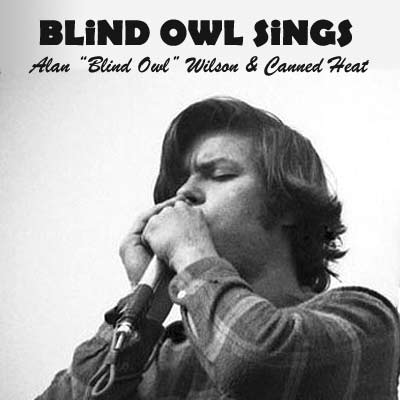
Image result for IMAGES OF Alan “Blind Owl” Wilson
* Alan “Blind Owl” Wilson, singer, songwriter and guitarist for the Laurel Canyon blues-rock band, Canned Heat, was found dead in his Topanga Canyon home on September 3, 1970. His death was written off as a suicide/OD. Wilson had moved to Topanga Canyon after the band’s Laurel Canyon home – on Lookout Mountain Avenue, next door to Joni Mitchell and Graham Nash’s home – burned to the ground. “Blind Owl” was just twenty-seven years old at the time of his death. A little more than a decade later, Wilson’s former bandmate, Bob “The Bear” Hite, who had once acknowledged in an interview that he had partied in the canyons with various members of the Manson Family, died of a heart attack at the ripe old age of 36.
* Jimi Hendrix, who reportedly briefly occupied the sprawling mansion just north of the Log Cabin after he moved to LA in 1968, died in London under seriously questionable circumstances on September 18, 1970. Though he rarely spoke of it, Jimi had served a stint in the U.S. Army with the 101st Airborne Division at Fort Campbell. His official records indicate that he was forced into the service by the courts and then released after just one year when he purportedly proved to be a poor soldier. One wonders though why he was assigned to such an elite division if he was indeed such a failure. One also wonders why he wasn’t subjected to disciplinary measures rather than being handed a free pass out of his ostensibly court-ordered service. In any event, Jimi himself once told reporters that he was given a medical discharge after breaking an ankle during a parachute jump. And one biographer has claimed that Jimi faked being gay to earn an early release. The truth, alas, remains rather elusive. At the time of Jimi’s death, the first person called by his girlfriend – Monika Danneman, who was the last to see Hendrix alive – was Eric Burden of the Animals. Two years earlier, Burden had relocated to LA and taken over ringmaster duties from Frank Zappa after Zappa had vacated the Log Cabin and moved into a less high-profile Laurel Canyon home. Within a year of Jimi’s death, an underage prostitute named Devon Wilson who had been with Jimi the day before his death, plunged from an eighth-floor window of New York’s Chelsea Hotel. On March 5, 1973, a shadowy character named Michael Jeffery, who had managed both Hendrix and Burden, was killed in a mid-air plane collision. Jeffery was known to openly boast of having organized crime connections and of working for the CIA. After Jimi’s death, it was discovered that Jeffery had been funneling most of Hendrix’s gross earnings into offshore accounts in the Bahamas linked to international drug trafficking. Years later, on April 5, 1996, Danneman, the daughter of a wealthy German industrialist, was found dead near her home in a fume-filled Mercedes.
* Jim Morrison, who for a time lived in a home on Rothdell Trail, behind the Laurel Canyon Country Store, may or may not have died in Paris on July 3, 1971. The events of that day remain shrouded in mystery and rumor, and the details of the story, such as they are, have changed over the years. What is known is that, on that very same day, Admiral George Stephen Morrison delivered the keynote speech at a decommissioning ceremony for the aircraft carrier USS Bon Homme Richard, from where, seven years earlier, he had helped choreograph the Tonkin Gulf Incident. A few years after Jim’s death, his common-law wife, Pamela Courson, dropped dead as well, officially of a heroin overdose. Like Hendrix, Morrison had been an avid student of the occult, with a particular fondness for the work of Aleister Crowley. According to super-groupie Pamela DesBarres, he had also “read all he could about incest and sadism.” Also like Hendrix, Morrison was just twenty-seven at the time of his (possible) death.
Image result for IMAGES OF  Brandon DeWilde,Image result for IMAGES OF  Brandon DeWilde,
* Brandon DeWilde, a good friend of David Crosby and Gram Parsons, was killed in a freak accident in Colorado on July 6, 1972, when his van plowed under a flatbed truck. In the 1950s, DeWilde had been an in-demand child actor since the age of eight. He had appeared on screen with some of the biggest names in Hollywood, including Alan Ladd, Lee Marvin, Paul Newman, John Wayne, Kirk Douglas and Henry Fonda. Around 1965, DeWilde fell in with Hollywood’s ‘Young Turks,’ through whom he met and befriended Crosby, Parsons, and various other members of the Laurel Canyon Club. DeWilde was just thirty at the time of his death.
Image result for IMAGES OF  Christine Frka,
* Christine Frka, a former governess for Moon Unit Zappa and the Zappa family’s former housekeeper at the Log Cabin, died on November 5, 1972 of an alleged drug overdose, though friends suspected foul play. As “Miss Christine,” Frka had been a member of the Zappa-created GTOs, a musical act, of sorts, composed entirely of very young groupies. She was also the inspiration for the song, “Christine’s Tune: Devil in Disguise” by Gram Parson’s Flying Burrito Brothers. Frka was probably in her early twenties when she died, possibly even younger.
Image result for IMAGES OF   Danny Whitten,
* Danny Whitten, a guitarist/vocalist/songwriter with Neil Young’s sometime band, Crazy Horse, died of an overdose on November 18, 1972. According to rock ‘n’ roll legend, Whitten had been fired by Young earlier that day during rehearsals in San Francisco. Young and Jack Nietzsche, Phil Spector’s former top assistant, had given Whitten $50 and put him on a plane back to LA. Within hours, he was dead. Whitten was just twenty-nine.
* Bruce Berry, a roadie for Crosby, Stills, Nash & Young, died of a heroin overdose in June 1973. Berry had just flown out to Maui to deliver a shipment of cocaine to Stephen Stills, and was promptly sent back to LA by Crosby and Nash. Berry was a brother of Jan Berry, of Jan and Dean. (Dean Torrence, the “Dean” of Jan and Dean, had played a part in the fake kidnapping of Frank Sinatra, Jr., just after the JFK assassination. The staged event was a particularly lame effort to divert attention away from the questions that were cropping up, after the initial shock had passed, about the events in Dealey Plaza.)
* Clarence White, a guitarist who had played with The Byrds, was run over by a drunk driver and killed on July 14, 1973. White had grown up near Lancaster, not far from where Frank Zappa spent his teen years. At least one member of White’s immediate family was employed at Edwards Air Force Base. The driver who killed young Clarence, just twenty-nine years old at the time of his death, was given a one-year suspended sentence and served no time.
* Gram Parsons, formerly with the International Submarine Band, The Byrds and the Flying Burrito Brothers, allegedly overdosed on a speed ball at the Joshua Tree Inn on September 19, 1973. Just two months before his death, Parson’s Topanga Canyon home had burnt to the ground. After his death, his body was stolen from LAX by the Burrito’s road manager, Phil Kaufman, and then taken back out to Joshua Tree and ritually burned on the autumnal equinox (Kaufman had been a prison buddy of Charlie Manson’s at Terminal Island; when Phil was released from Terminal Island in March of 1968, he quickly reunited with his old pal, who had been released a year earlier.) By the time of Gram’s death, his family had already experienced its share of questionable deaths. Just before Christmas, 1958, Parson’s father had sent Gram, along with his mother and sister, off to stay with family in Florida. The next day, just after the winter solstice, “Coon Dog” caught a bullet to the head. His death was recorded as a suicide and it was claimed that he had sent his family away to spare them as much pain as possible. It seems just as likely, however, that “Coon Dog” knew his days were numbered and wanted to get his family out of the line of fire. The next year, 1959, Gram’s mother married again, to Robert Ellis Parsons, who adopted Gram and his sister Avis. Six years later, in June of 1965, Gram’s mother died the day after a sudden illness landed her in the hospital. According to witnesses, she died “almost immediately” after a visit from her husband, Robert Parsons. Many of those close to the situation believed that Parsons had a hand in her death (very shortly thereafter, Robert Parsons married his stepdaughter’s teenage babysitter). Following his mother’s death, Parsons briefly attended Harvard University, and then launched his music career with the formation of the International Submarine Band, which quickly found its way to – where else? – Laurel Canyon. Gram’s death in 1973 at the age of 26 left his younger sister Avis as the sole surviving member of the family. She was killed in 1993, reportedly in a boating accident, at the age of 43.
* “Mama” Cass Elliot, the “Earth Mother” of Laurel Canyon whose circle of friends included musicians, Mansonites, young Hollywood stars, the wealthy son of a State Department official, singer/songwriters, assorted drug dealers, and some particularly unsavory characters the LAPD once described as “some kind of hit squad,” died in the London home of Harry Nilsson on July 29, 1974 (Nilsson had been a frequent drinking buddy of John Lennon in Laurel Canyon and on the Sunset Strip). At thirty-two, Cass had lived a long and productive life, by Laurel Canyon standards. Four years later, in the very same room of the very same London flat, still owned by Harry Nilsson, Keith Moon of The Who also died at thirty-two (on September 7, 1978). Though initial press reports held that Cass had choked to death on a ham sandwich, the official cause of death was listed as heart failure. Her actual cause of death could likely be filed under “knowing where too many of the bodies were buried.” Moon reportedly died from a massive overdose of a drug used to treat alcohol withdrawal. Like Cass, Moon had at one time been a resident of Laurel Canyon.
* Amy Gossage, Graham Nash’s girlfriend at the time, was murdered in her San Francisco home on February 13, 1975. Just twenty years old at the time, she had been stabbed nearly fifty times and was bludgeoned beyond recognition. Amy’s father, a famed advertising/PR executive, had died of leukemia in 1969. Not long after, her half-sister had been killed in a car crash. In May of 1974, her mother, the daughter of a wealthy banking family, died as well, reportedly of cirrhosis of the liver. That left just Amy, age 19, and her brother Eben, age 20, both of whom reportedly had serious drug dependencies. Amy’s brutal murder, cleverly enough, was pinned on Eben. Police had conveniently found bloodstained clothes, along with a hammer and scissors, sitting on the porch of Eben’s apartment, looking very much as though it had been planted. A friend of Eben’s would later remark, perhaps quite tellingly, “If Eben did kill her, I’m convinced he doesn’t know he did it.”
* Tim Buckley, a singer/songwriter signed to Frank Zappa’s record label and managed by Herb Cohen, died of a reported overdose on June 29, 1975. Buckley had once appeared on an episode of The Monkees, and, like Monkee Peter Tork (and so many others in this story), he hailed from Washington, DC. Buckley was just twenty-eight at the time of his death. His son, Jeff Buckley, also an accomplished musician, managed to remain on this planet two years longer than his dad did; he was thirty when he died in a bizarre drowning incident on May 29, 1997.
* Phyllis Major Browne, wife of singer/songwriter Jackson Browne, reportedly overdosed on barbiturates on March 25, 1976. Her death was – you all should know the words to this song by now – ruled a suicide. She was just thirty years old.
There are a few other curious deaths we could add here as well, though they were only indirectly related to the Laurel Canyon scene. Nevertheless, they deserve an honorable mention, especially the Bobby Fuller and Phil Ochs entries; the former because it is a rather extraordinary example of the exemplary work done by the LAPD, and the latter because it just may contain a key to understanding the Laurel Canyon phenomenon:
* Bobby Fuller, singer/songwriter/guitarist for the Bobby Fuller Four, was found dead in his car near Grauman’s Chinese Theater on July 18, 1966, after being lured away from his home by a mysterious 2:00-3:00 AM phone call of unknown origin. Fuller is best known for penning the hit song “I Fought the Law,” which had just hit the charts when he supposedly committed suicide at the age of twenty-three. There were multiple cuts and bruises on his face, chest and shoulders, dried blood around his mouth, and a hairline fracture to his right hand. He had been thoroughly doused with gasoline, including in his mouth and throat. The inside of the car was doused as well, and an open book of matches lay on the seat. It was perfectly obvious that Fuller’s killer (or killers) had planned to torch the car, destroying all evidence, but likely got scared away. The LAPD, nevertheless, ruled Fuller’s death a suicide – despite the coroner’s conclusion that the gas had been poured after Bobby’s death. Police later decided that it wasn’t a suicide after all, but rather an accident. They didn’t bother to explain how Fuller had accidentally doused himself with gasoline after accidentally killing himself. At the time of his death, one of Fuller’s closest confidants was a prostitute named Melody who worked at PJ’s nightclub, where Bobby frequently played. The club was co-owned by Eddie Nash, who would, many years later, orchestrate the Wonderland massacre. A few years after Bobby’s death, his brother and bass player, Randy Fuller, teamed up with drummer Dewey Martin, formerly of Buffalo Springfield.
* Gary Hinman, a musician, music teacher, and part-time chemist, was brutally murdered in his Topanga Canyon home on July 27, 1969. Convicted of his murder was Mansonite Bobby Beausoleil, who had played rhythm guitar in a local band known as the Grass Roots. To avoid confusion with the more famous band already using that name, the Laurel Canyon band changed its name to Love. Beausoleil would claim that the band’s new name was inspired by his own nickname, Cupid.
* Janis Joplin, vocalist extraordinaire, was found dead of a heroin overdose on October 4, 1970 at the Landmark Hotel, about a mile east of the mouth of Laurel Canyon, where she occasionally visited. Indications were that she had taken or been given a “hot shot,” many times stronger than standard street heroin. Joplin’s father, by the way, was a petroleum engineer for Texaco. And though it might normally seem an odd coupling, it somehow seems perfectly natural, in the context of this story, that Janis once dated that great crusader in the war on all things immoral, William Bennett. Like Morrison and Hendrix, Joplin died at the age of twenty-seven.
* Duane Allman and Berry Oakley, lead guitarist and bass player for the Allman Brothers, were killed in freakishly similar motorcycle crashes on October 29, 1971 and November 11, 1972. Allman was the son of Willis Allman, a US Army Sergeant who had been murdered by another soldier near Norfolk, Virginia (home of the world’s largest naval installation) on December 26, 1949. In 1967, Duane and his younger brother, Gregg, then billing themselves as The Allman Joys, ventured out to Los Angeles. While there, Gregg auditioned for and was almost signed by the Laurel Canyon band Poco, which featured Buffalo Springfield alumni Richie Furay and Jim Messina, as well as future Eagle Randy Meisner. Duane was killed when a truck turned in front of his motorcycle at an intersection and inexplicably stopped. Just over a year later, Oakley had a similar run-in with a bus, just three blocks from where Allman had been killed. Following the crash, Berry had dusted himself off and declined medical attention, insisting that he was okay. Three hours later, he was rushed to the hospital, where he died. Both Oakley and Allman were just twenty-four years old.
* Phil Ochs, folk singer/songwriter and political activist, was found hanged in his sister’s home in Far Rockaway, New York on April 9, 1976. Throughout his life, Ochs was one of the most overtly political of the 1960's rock and folk music stars. A regular attendee at anti-war, civil rights, and labor rallies, Ochs appeared to be, at all times, an unwavering political leftist (he named his first band The Singing Socialists). That all changed, however, and rather dramatically, in the months before his death. Born in El Paso, Texas on December 19, 1940, Phil and his family moved frequently during the first few years of his life. His father, Dr. Jacob Ochs, had been drafted by the US Army and assigned to various military hospitals in New York, New Mexico and Texas. In 1943, Dr. Ochs was shipped overseas, returning two years later with a medical discharge. Upon his return, he was immediately institutionalized and didn’t return to his family for another two years. During that time, he was subjected to every ‘treatment’ imaginable, including electroshock ‘therapy.’ When he finally returned to his family, in 1947, he was but a shell of his former self, described by Phil’s sister as “almost like a phantom.” Beginning in the fall of 1956, Phil Ochs began attending Staunton Military Academy, the very same institution that future ‘serial killer’/cult leader Gary Heidnik would attend just one year after Ochs graduated.
During Phil’s two years there, a friend and fellow band member was found swinging from the end of a rope (I probably don’t need to add here that the death was ruled a suicide). Following graduation, Phil enrolled at Ohio State University, but not before, oddly enough, having a little plastic surgery done to alter his appearance (doing such things, needless to say, was rather uncommon in 1958). In early 1962, just months before his scheduled graduation, Ochs dropped out of college to pursue a career in music. By 1966, he had released three albums. In 1967, under the management of his brother, Michael Ochs, Phil moved out to Los Angeles. Michael had begun working the previous year as an assistant to Barry James, who maintained a party house at 8504 Ridpath in Laurel Canyon. In the early 1970s, with his career beginning to fade, Phil Ochs began to travel internationally, usually accompanied by vast quantities of booze and pills. Those travels included a visit to Chile, not long before the US-sponsored coup that toppled Salvador Allende. In early summer of 1975, Phil Ochs’ public persona abruptly changed. Using the name John Butler Train, Ochs proclaimed himself to be a CIA operative and presented himself as a belligerent, right-wing thug. He told an interviewer that, “on the first day of summer 1975, Phil Ochs was murdered in the Chelsea Hotel by John Train … For the good of societies, public and secret, he needed to be gotten rid of.”
That symbolic assassination, on the summer solstice, took place at the same hotel that Devon Wilson had flown out of a few years earlier. One of Ochs’ biographers would later write that Phil/John “actually believed he was a member of the CIA.” Also in those final months of his life, Ochs began compiling curious lists, with entries that clearly were references to US biological warfare research: “shellfish toxin, Fort Dietrich, cobra venom, Chantilly Race Track, hollow silver dollars, New York Cornell Hospital …” Many years before Ochs’ metamorphosis, in an interesting bit of foreshadowing, psychological warfare operative George Estabrooks explained how US intelligence agencies could create the perfect spy: “We start with an excellent subject … we need a man or woman who is highly intelligent and physically tough. Then we start to develop a case of multiple personality through hypnotism. In his normal waking state, which we will call Personality A, or PA, this individual will become a rabid communist. He will join the party, follow the party line and make himself as objectionable as possible to the authorities. Note that he will be acting in good faith. He is a communist, or rather his PA is a communist and will behave as such.

Then we develop Personality B (PB), the secondary personality, the unconscious personality, if you wish, although this is somewhat of a contradiction in terms. This personality is rabidly American and anti-communist. It has all the information possessed by PA, the normal personality, whereas PA does not have this advantage … My super spy plays his role as a communist in his waking state, aggressively, consistently, fearlessly. But his PB is a loyal American, and PB has all the memories of PA. As a loyal American, he will not hesitate to divulge those memories.” Estabrooks never explained what would happen if the programming were to go haywire and Personality B were to become the conscious personality, but my guess is that such a person would be considered a severe liability and would be treated accordingly. They might even be find themselves swinging from the end of a rope. Phil Ochs was thirty-five at the time of his death.
Image result for IMAGES OF Judee Lynn Sill
And with that, I think we can move on now from the Laurel Canyon Death List. The list is not yet complete, mind you, since we have only covered the years 1966-1976. Rest assured then that we will continue to add names as we follow the various threads of this story. Some of those names will be quite familiar, while others will be significantly less so. One of the names from that era that has been all but forgotten is Judee Lynn Sill, who was once favorably compared to such other Laurel Canyon singer/songwriters as Joni Mitchell, Judi Collins and Carole King. By the time of her death on November 23, 1979, however, she had been all but forgotten, and not a single obituary was published to note her passing.
Judee was born in Studio City, California, not far from the northern entrance to Laurel Canyon, on October 7, 1944. Her father, Milford “Bud” Sill, was reportedly a cameraman for Paramount Studios with numerous Hollywood connections. When Judee was quite young, however, Bud moved the family to Oakland and opened a bar known as “Bud’s Bar.” He also operated a side business as an importer of rare animals, which required him to spend a considerable amount of time traveling in Central and South America. Such a business, it should be noted, would provide an ideal cover for covert intelligence work. In any event, Bud Sill was dead by 1952, when Judee was just seven or eight years old. Depending on who is telling the story, Bud died either from pneumonia or a heart attack.
Following Bud’s death, the family relocated back to Southern California and Judee’s older brother Dennis, still in his teens, took over the family importing business. That didn’t last long though as Dennis soon turned up dead down in Central America, either from a liver infection or a car accident. The animal importing business, I guess, is a rather dangerous one.
Judee’s mother, Oneta, met and married Ken Muse, an Academy Award winning animator for Hanna-Barbera who was described by Judee as an abusive, violent alcoholic. At fifteen, Judee fled her violent home life and lived with an older man with whom she pulled off a series of armed robberies in the San Fernando Valley. Those activities landed her in reform school, which did little to curb her appetite for drugs, crime and alcohol. She spent the next few years with a serious heroin addiction, which she financed by dealing drugs and turning tricks in some of LA’s seedier neighborhoods.
By 1963, Judee had cleaned herself up enough to enroll in junior college. In the early winter of 1965, however, Judee’s mom, her last surviving family member, died either of cancer or of complications arising from her chronic alcoholism (take your pick; the details of this story will likely remain forever elusive). Barely an adult, Judee was left all alone in the world, and thus began another downward spiral into drugs and crime, which culminated in her being arrested and possibly serving time on forgery and drug charges.
In the late 1960s, with her addictions apparently temporarily curbed, Sill joined the Laurel Canyon scene, where she attempted to forge a career as a singer/songwriter. Her first big break came when she sold the song “Lady O” to The Turtles (yet another Laurel Canyon band to hit it big in the mid-1960s; best known for the hit single “Happy Together,” The Turtles were led by lead vocalist/songwriter Howard Kaylan, who happened to be, small world that it is, a cousin of Frank Zappa’s manager and business partner, Herb Cohen). The band released the song, which featured Judee’s guitar work, in 1969. The next year, Sill became the first artist signed to David Geffen’s fledgling Asylum record label. The year after that, her self-titled debut album became Asylum’s first official release. The first single from the album, “Jesus Was a Crossmaker,” was produced by Graham Nash, whom she opened for on tour following the album’s release.
Though critically well-received, the album’s sales were disappointing, in part because the record was overshadowed by the debut albums of Jackson Browne and The Eagles, both released by Asylum shortly after the release of Judee’s album. Sill’s second album, 1973’s “Heart Food,” was even more of a commercial disappointment. Nevertheless, in 1974 she began work on a third album in Monkee Mike Nesmith’s recording studio. Prior to completion, however, she abandoned the project and promptly disappeared without a trace. What became of her between that time and her death some five years later remains largely a mystery. It is assumed that she once again descended into a life of drugs and prostitution, but no one seems to know for sure.
It is alleged that she was seriously injured when her car was rear-ended by actor Danny Kaye, causing her to suffer from chronic back pain thereafter, thus contributing to her drug addictions. According to a friend of hers, she lived in a home that featured an enormous photo of Bela Lugosi above the fireplace, a large ebony cross above her bed, and racks of candles. She is said to have read extensively from Rosicrucian manuscripts and from the writings of Aleister Crowley, to have possessed a complete collection of the work of Helena Blavatsky, and to have been a gifted tarot card reader.
What is known for sure is that, on the day after Thanksgiving, 1979, Judee Sill, the last surviving member of her family, was found dead in a North Hollywood apartment. The cause of death was listed as “acute cocaine and codeine intoxication.” It was claimed that a suicide note was found, but friends insisted that the supposed note was either a portion of a diary entry or an unfinished song. One of her friends would later note that, at some point in her life, Judee began to realize that “there was a part of her that wasn’t under her conscious control.” I’m guessing that Phil Ochs, and quite a few other characters in this story, could relate to that.

To be continued....


FAIR USE NOTICE

THIS SITE CONTAINS COPYRIGHTED MATERIAL THE USE OF WHICH HAS NOT ALWAYS BEEN SPECIFICALLY AUTHORIZED BY THE COPYRIGHT OWNER. AS A JOURNALIST, I AM MAKING SUCH MATERIAL AVAILABLE IN MY EFFORTS TO ADVANCE UNDERSTANDING OF ARTISTIC, CULTURAL, HISTORIC, RELIGIOUS AND POLITICAL ISSUES. I BELIEVE THIS CONSTITUTES A 'FAIR USE' OF ANY SUCH COPYRIGHTED MATERIAL AS PROVIDED FOR IN SECTION 107 OF THE US COPYRIGHT LAW.

IN ACCORDANCE WITH TITLE 17 U.S.C. SECTION 107, THE MATERIAL ON THIS SITE IS DISTRIBUTED WITHOUT PROFIT TO THOSE WHO HAVE EXPRESSED A PRIOR INTEREST IN RECEIVING THE INCLUDED INFORMATION FOR RESEARCH AND EDUCATIONAL PURPOSES. COPYRIGHTED MATERIAL CAN BE REMOVED ON THE REQUEST OF THE OWNER.