Showing posts with label Foundations. Show all posts

Friday, January 6, 2017

PART 5 OF 6:STANDING ROCK: PROFUSION, COLLUSION & BIG MONEY PROFITS CELEBRITY FETISH AS A TOOL OF EMPIRE

STANDING ROCK: PROFUSION, 
COLLUSION & BIG MONEY PROFITS
CELEBRITY FETISH AS
 A TOOL OF EMPIRE

Celebrity Fetish as a Tool of Empire
Generated by IJG JPEG Library
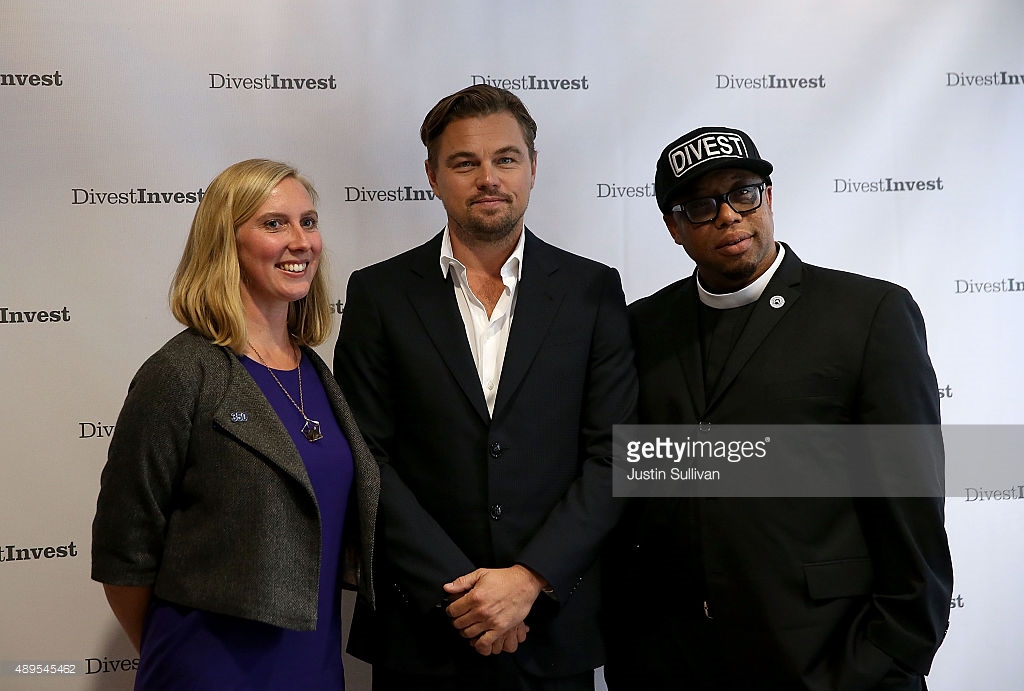
“Actor Leonardo DiCaprio (C) poses for a photo with May Boeve, executive director of 350.org (L) and Rev. Lennox Yearwood, Jr. (R) following a Divest-Invest new conference on September 22, 2015 in New York City.” Getty Images
“Any account of celebrities must be predicated on the recognition that ‘the interests served are first of all those of capital.'” — Celebrity Culture, 2006 citing Graeme Turner
As Lebanese-Australian professor Ghassan Hage (Future Generation Professor of Anthropology and Social Theory at the University of Melbourne) demonstrates in his work, accumulation of capital underpins an ideology of race, in which multiculturalism works best when citizens yearn and strive to achieve Whiteness.[1] N.G.O's (that comprise the N.P.I.C) exploit this psychology to further protect existing power structures. Who better to target and utilize than Indigenous peoples, those deliberately impoverished and exploited by the state – to ultimately protect and expand capital. And to protect and expand the N.P.I.C itself.
One example of this mechanism being utilized is via white celebrity manipulating Indigenous and non-Anglo worship and the acceptable forms of integration and assimilation of the Black bourgeoisie for exploitation. Gandhi replaces Sitting Bull, Leonardo DiCaprio replaces Evo Morales, 350.org replaces the Zapatistas, Akin to Black Skin White Masks – Black Lives Matter (the N.G.O) replaces the Black Panther Party (past) as well as the Revolutionary Armed Forces of Colombia (present). Mark Ruffalo replaces Jose Mujica, Bill McKibben replaces Ken Saro-Wiwa, Van Jones replaces Omali Yeshitela, Angela Davis replaces Assata Shakur, Naomi Klein replaces Rosa Parks, Snoop Dog replaces Stokely Carmichael, a sanitized Martin Luther King replaces Malcolm X. Patrice Lumumba is replaced with Bernie Sanders. The Oka Warriors are replaced with Idle No More stripped bare of its teeth. And on and on it goes.
chairman-omali
Omali Yeshitela: “The worldwide leader of the African Revolution who developed the theory of African Internationalism, built revolutionary organization all over the planet and whose analysis and summations have influenced a whole new generation of African resistance today.” [Source]
“I’ve been watching the benefit concert tonight, tribal representation from Standing Rock spoke up in support of the ‘men in blue’ and name dropped Barrack and Michelle as having the tribe’s back, of course drawing applause from the bourgeoisie liberals in the crowd every time. Disappointing to say the least.” — Jeff Cole in response to the Dave Mathews concert sponsored by Unilever’s Ben & Jerry’s
To further demonstrate the intertwining of white celebrity and N.G.O formation, the aforementioned actor Mark Ruffalo is a long-time spokesperson for international N.G.O's (Purpose #WalktheWalk campaign, Global Green, etc.) and United Nations (Global Goals, etc.). He is founder of the NGO Water Defense as well as co-founder of The Solutions Project.

solutionsproject-logo
the-solutions-project_2
Mark Ruffalo and Leonardo DiCaprio promote their investment, The Solutions Project. Kelly Taub / BFA.com
dicaprio-and-ruffalo-slutions-project
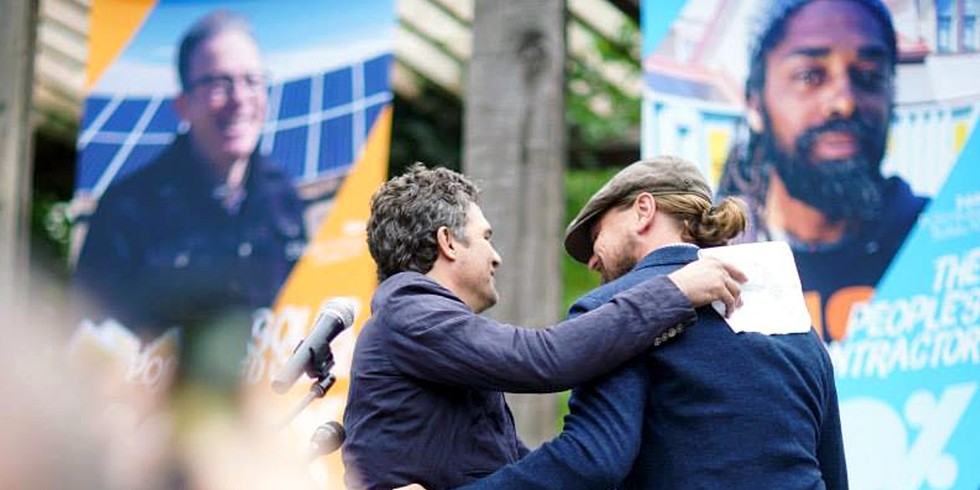
Mark Ruffalo and Leonardo DiCaprio at an event hosted by The Solutions Project. Kelly Taub / BFA.com

ruffalo-at-standing-rock
We Are the Gods Now
jason-silva
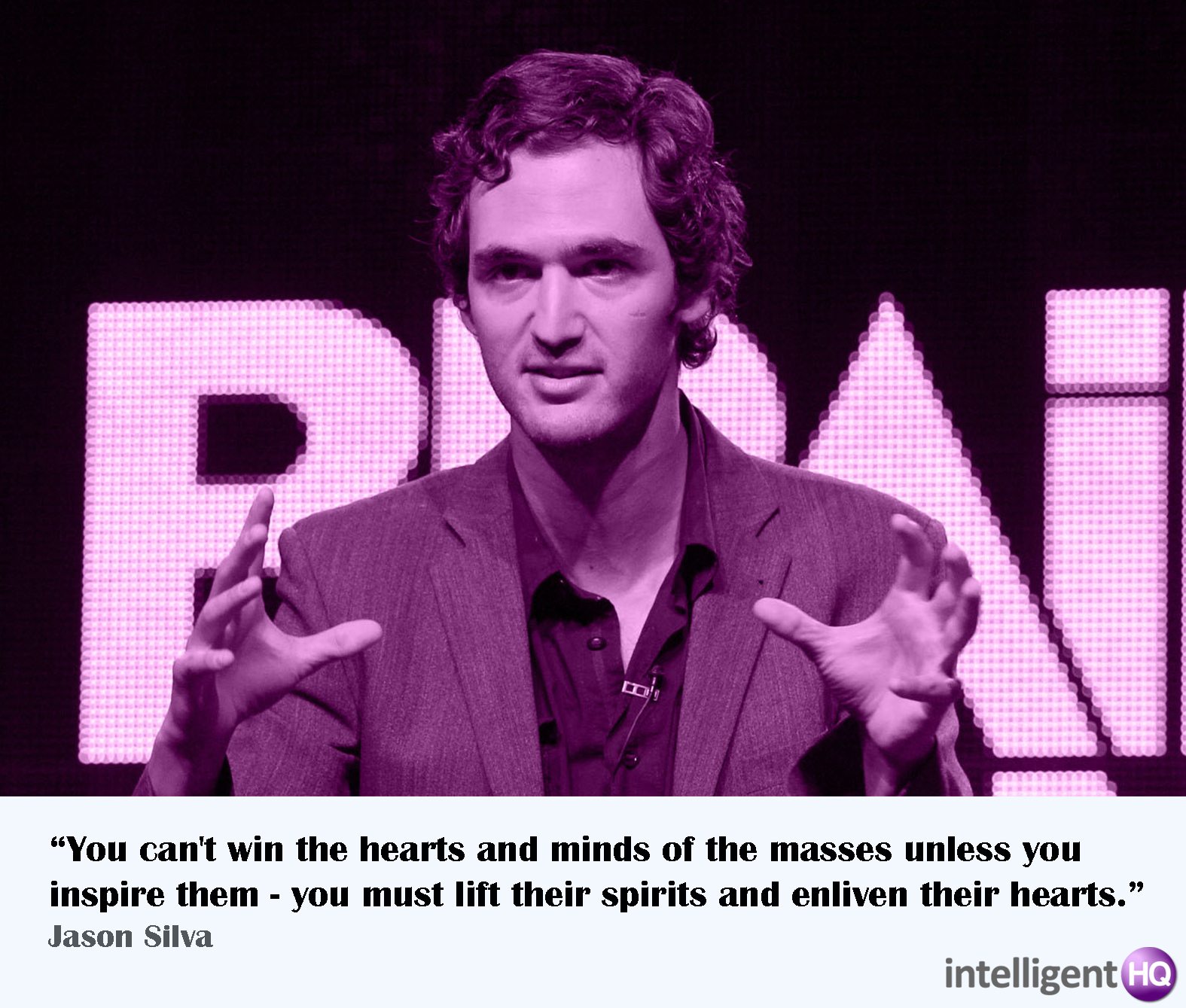
“We are gods. Our tools make us gods.” — Promoter of The Solutions Project, “futurist” and filmmaker Jason Silva [Source: Forbes]
Mark Ruffalo, Leonardo DiCaprio, Elon Musk, Jeff Skoll, etc. etc. want to turn their millions into billions via The Solutions Project (solar industry). Everyone is on board. Consider that there has been no growth in the US for five years while the whole global economy is close to stall speed. The Solutions Project campaign is largely based on continued  social engineering to further ignore reality (framed as negative) and embrace fantasy (framed as positive) exploiting North American celebrity fetish. The introductory Solutions Project video (April 24, 2014) is narrated by “futurist” Jason Silva, (a Fellow at the Hybrid Reality Institute, a research and advisory think tank focused on the intersection of technology trends and geopolitics) who lectures on his belief that “we are the gods now”. The website appears to be designed by Purpose – the for-profit sister org. of Avaaz.
The Solutions Project is co-founded with Marco Krapels (banker, Senior Vice President of Strategy & Global Markets at Elon Musk’s SolarCity, co-founder of Empowered By Light), Mark Z. Jacobson (Stanford) and film-maker Josh Fox. Investors behind The Solutions Project include The Leonardo DiCaprio Foundation, The Elon Musk Foundation, The 11th Hour Project, The Sara and Ev Williams Foundation, Skoll Global Threats Fund, The Park Foundation, The Compton Foundation, Wallace Global Fund, The Better Tomorrow Fund, The Cogut Family, Leah Missbach Day and The Schmidt Family Foundation.
Board of directors include Billy Parish (Mosaic Solar), Mark Jacobson and Van Jones. [Full list]
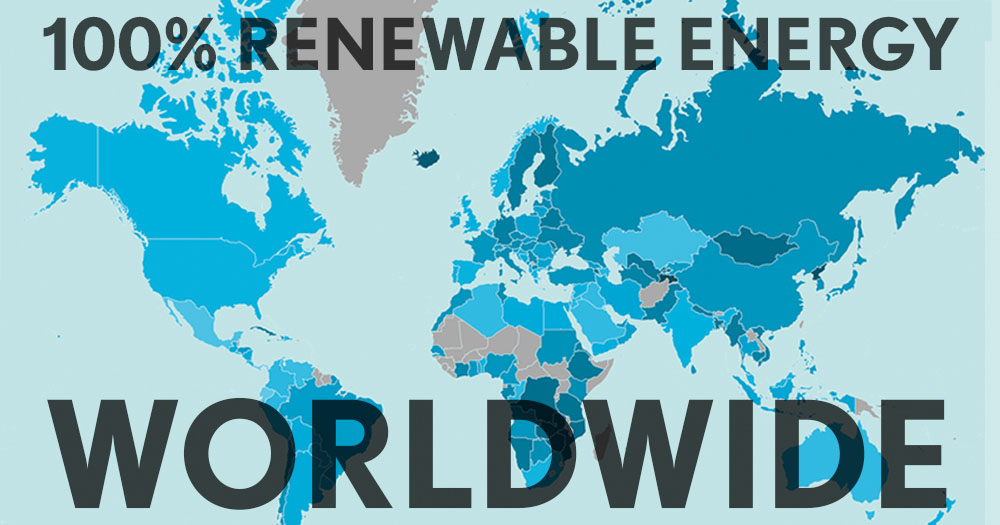
the-solutions-project-worldwide
The Solutions Project graphic
Recently the One Solutions Project launched the Fighter Fund which will garner loyalty from community groups such as Native Renewables. For a mere pittance, One Solutions Project and partners will use native efforts to build brand credibility and adoration while simultaneously securing new customers: “The 100% Leadership Fund involves bigger investments and longer-term commitments to organizations across the country. But we need to be able to move money faster and more strategically to keep pace with what is going on with the climate justice movement. The Fighter Fund allows us to do that—and to make riskier front line bets.” [Source] This is best described as white savior solidarity serving white imperialism.
Philanthropy as a Tool of Empire: Clinton Global Initiative, Rockefeller & the Bush Foundation
“… but these great plains reservations once thought valueless, are the Saudi Arabia of reliable wind energy…”— Clinton Global Initiative (referenced video)
On April 5, 2016 Standing Rock Sioux Tribe voted to accept $125,000 from ConEdison for the Oyate community development. [ MOTION: “…TO APPROVE TO ACCEPT THE DONATION OF $125,000.00 FROM CONSOLIDATED EDISON DEVELOPMENT, INC. FOR OYATE/COMMUNITY DEVELOPMENT.][ “Consolidated Edison, Inc., commonly known as Con Edison or Con Ed, is one of the largest investor-owned energy companies in the United States, with approximately $13 billion in annual revenues as of 2016, and over $47 billion in assets.” Source]
“The Standing Rock Sioux Tribe received a big donation for privatized housing development. This is the first assistance of its kind for the tribe.” …. ConEdison Development will own the wind project for 30-40 years. They are looking forward to doing more.” — KFYRTV, April 16, 2016
On April 5, 2016 Standing Rock Sioux Tribe also voted to accept 250,000.00 from ConEdison for the tribe’s co-operation for the Campbell County Wind project completed in 2015. [MOTION: “…TO APPROVE THE DONATIONS FROM BOTH COMPANYS, CONEDISON DEVELOPMENT IN THE AMOUNT OF $125,000.00 AND FEGAN INC., IN THE AMOUNT OF $125,000.00”]. The 55-turbine wind project in South Dakota is said to power 25K homes. This begs the question – what fossil fuel or nuclear plants became decommissioned after this energy came on line. This answer is, as it will always be: none.
“Twentieth-century economic growth theory also sees technological change as the main cause of increased production and consumption. In contrast, some ecologically-oriented economists and practically all governments, green political parties and NGOs believe that efficiency gains lower consumption and negative environmental impact. Others doubt this ‘efficiency strategy’ towards sustainability, holding that efficiency gains ‘rebound’ or even ‘backfire’ in pursuing this goal, causing higher production and consumption. Because many environmental problems demand rapid and clear policy recommendations, this issue deserves high priority in ecological economics. If Jevons is right, efficiency policies are counter-productive, and business-as-usual efficiency gains must be compensated for with physical caps like quotas or rationing.” —  Jevons’ paradox, Ecological Economics, July 1, 2005
Here the present angst of the NGOs regarding the seemingly newfound “concern” over particular Indigenous issues (anti-pipeline campaigns/protests to obscure Warren Buffett’s 21st century empire aside) can actually be traced to 2011: a $2 to $3 billion dollar wind project. The Joint Wind Power Development Project on Tribal Lands was officially launched in 2013 by the Clinton Global Initiative (CGI). The six Sioux Tribes (Standing Rock Sioux Tribe, Cheyenne River Sioux Tribe, Crow Creek Sioux Tribe, Flandreau Santee Sioux Tribe, Oglala Sioux Tribe, Rosebud Sioux Tribe, Sisseton Wahpeton Oyate Sioux Tribe and Yankton Sioux Tribe) formed the Oceti Sakowin Power Authority which was developed in partnership with CGI, Rockefeller Philanthropy Advisors, the Bush Foundation, Northwest Area Foundation, Herron Consulting LLC and Arent Fox LLP. Here it should be noted that the CGI has been a key financier of 350.org (a Rockefeller incubated NGO) from its inception. Following a three million dollar commitment into *Energy Action Coalition the CGI financed Step It Up. Step It Up transitioned into 1Sky, which then merged with 350.org in 2011. [Video:1Sky at CGI] [*Energy Action Coalition was founded by Billy Parish. Parish is a co-founder/CEO of Mosaic Solar. Parish serves on the Board of Directors for The Solutions Project1Sky, as well serving on the U.S. Advisory Council for 350.org.]
“In 2013, six Sioux Tribes in South Dakota committed to the formation of the Oceti Sakowin Power Authority, a Multi-Tribal Power Authority, with the purpose of designating Tribally-owned land for a wind farm and transmission facilities. The Sioux Tribes, through the Oceti Sakowin Power Authority, committed to the creation of the Power Authority and the pre-development phase of a longer-term project to finance, develop and operate a 1,000 MW+ utility-scale wind power and transmission system across the South Dakota Sioux Reservations. The creation of the Power Authority will uniquely allow the Sioux Tribes to own the wind and transmission assets and distribute the surplus revenue to its member Tribes.”
Video: June 21, 2013, Clinton Global Initiative:
This 1,000 megawatt commercial scale distributed wind farm and transmission system was funded by private grants investments and more than two billion dollars in public power bonds. Here it must be noted that thenew economy being marketed by the NPIC on behalf on global hegemony is just as much about looting the treasury as it is about the coming financialization of nature via payments for ecosystem services. Consider that in the 1960’s Washington Public Power Supply System (W.P.P.S.S) saw an opportunity to meet growing consumption demands in the Northwest vis nuclear power. “It planned a system of five nuclear power plants that would be financed by a public issue of bonds and repaid with sales from the plants. The bonds were issued, but the robust sales that W.P.P.S.S had intended never materialized.” Eventually, W.P.P.S.S defaulted on $2.25 billion worth of municipal bonds. [Source]
To again emphasize what was stated above, this is best described as white savior solidarity serving white imperialism. Such “progress” is always done at the behest of the same white power structure that has dictated terms of engagement for centuries. This is even more so considering “renewable energy” is anything but clean while the goal of “100% renewable for 100% promises further imperialism, further ecocide and further Indigenous genocide throughout the globe.
ben-jerrys-native-energy-partnership
Above: Green Dream Farm  in partnership with Unilever’s Ben & Jerry’s and Native Energy  a carbon offset and project development company. The project is financed in part by Green Dream Farm owner Chris Wagner and in part by Ben & Jerry’s through an offset purchase from NativeEnergy. [Source]
N.G.O's want to “win” for branding purposes and to secure more millions. In the meantime, it’s all about social metrics. Certainly not about centuries of violence and oppression upon Indigenous peoples. Certainly not about the Indigenous peoples being used as lab rats in the Bakken.

Pacifism as Pathology

In the video by Fusion, actor Mark Ruffalo gives a lesson on how Standing Rock “protectors” must behave. Conditioning a warrior culture to be passive in the face of genocide should be considered a crime against Indigenous Peoples and nations everywhere. A white man (in this instance an American with Italian heritage) reframing the moral right to self-defense with “you are that system ” while basking in enormous privilege from the same structural system, reveals a most blatant paternalism. Paternalism redefined as truth – made possible by celebrity fetish.
“The most important thing is that we remain peaceful. That we don’t take up the same system of violence that’s being used against us. Because once you take up that violence you are that system and every social movement where’s been peaceful resistance when they not taken up violence they win. Every time the police hit you with a rubber bullet or mace you or beat you or put you in dog cages and treat you like an animal they lose. Every time the National Guard comes and stands as an extension of the fossil fuel industry and does not fight for the people they lose. They lose when you remain peaceful. And it’s hard. It’s really, really hard. But that’s how you win.”  — Actor Mark Ruffalo
The most important thing is that we defend our lands by any means necessary. That we don’t submit to the system of violence that’s being used against us.
“Because once you take up that violence you are that system and every social movement where’s been peaceful resistance when they not taken up violence they win.” We have a right to defend ourselves. Doing so, by any means necessary is not an act of violence, it is an act of self defense.
“… every social movement where’s been peaceful resistance when they not taken up violence they win.” Where are these social movements that have won solely on peaceful resistance?  They do not exist.
“Every time the police hit you with a rubber bullet or mace you or beat you or put you in dog cages and treat you like an animal they lose.” Let’s tell that to the millions incarcerated by the American prison industry. That they have in fact won. Let’s inform all those who have suffered under police brutality that they can relax knowing they have in fact won.
“Every time the National Guard comes and stands as an extension of the fossil fuel industry and does not fight for the people they lose.” Let’s tell that to the millions murdered by the US military that stands as an extension of the fossil fuel industry and does not fight for the people (unless they are white), that it is the military that has lost.
We lose if we allow ourselves to reject a diverse set of tactics out of a false moral superiority. We lose if we allow our oppressor and accomplices to dictate the rules of engagement. And it’s hard. It’s really, really hard. But that’s how you win.
“Celebrity-driven campaigns can also be seen to work to responsibility consumers and audiences as agents of change, through their targeting of audiences, public's, and private individuals; this often elides or willfully ignores, the offending structures, corporations, and/or other actors involved …” — Commodity Activism: Cultural Resistance in Neoliberal Times, 2013
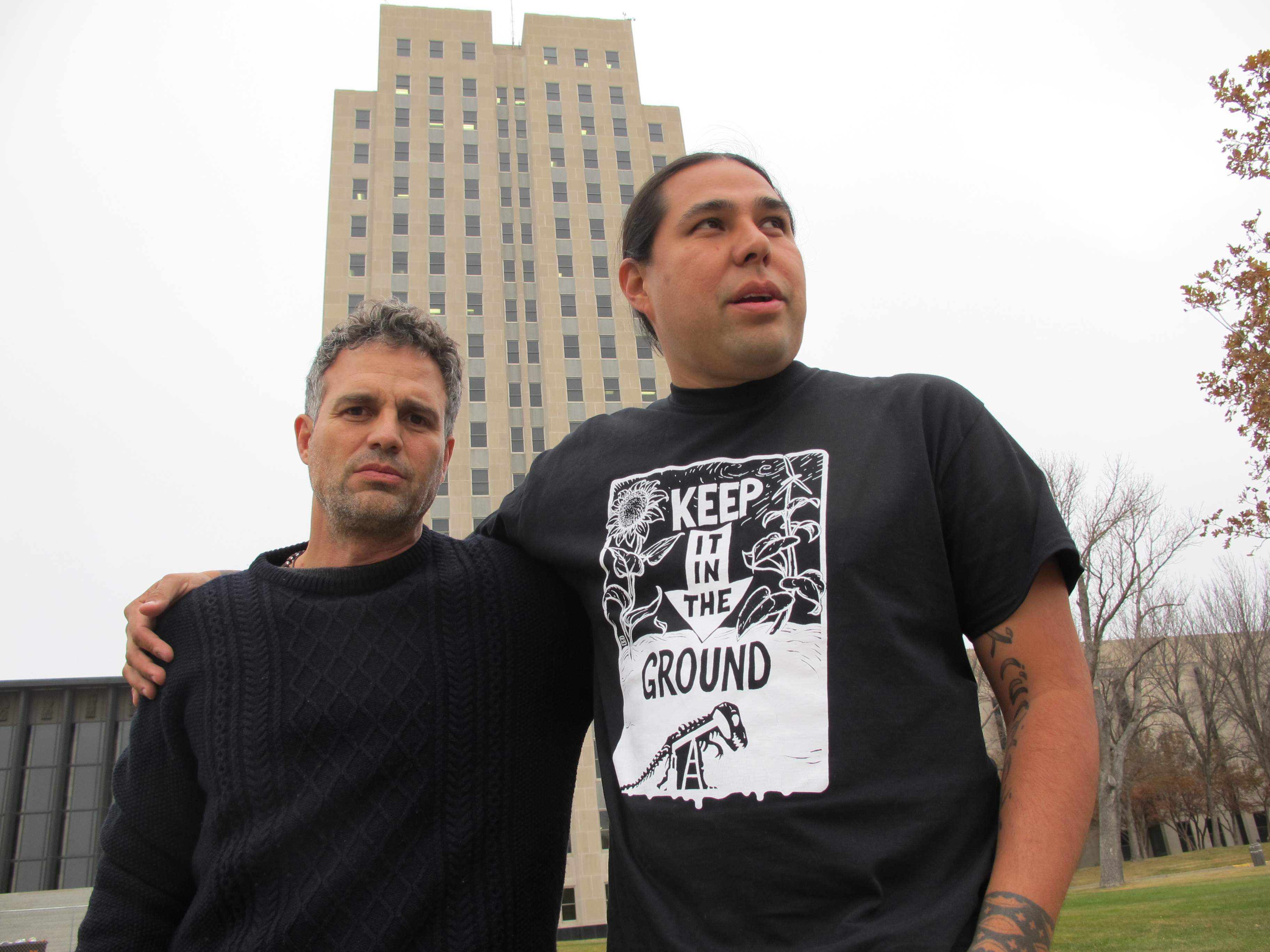
dallas-goldtooth-2
“Actor-activist Mark Ruffalo, left, poses with Dallas Goldtooth, of the Indigenous Environmental Network, outside the state Capitol in Bismarck, N.D., Tuesday, Oct. 25, 2016. Ruffalo traveled to North Dakota to support the Standing Rock Sioux Tribe in its opposition to the Dakota Access oil pipeline. Ruffalo is co-founder of The Solutions Project, which promotes clean and renewable energy.” [Source]
The pacification of civil society and Indigenous resistance is ongoing, intensifying and glaring. It is a taboo subject framed as such by those who protect the current power structures, thereby ensuring the rules of engagement are dictated by the captors. Captivity of mind and thought can be far more powerful than physical captivity. This cannot be understated. When one observes the identical rhetoric coming from the oppressors and the oppressed, it is past time for self reflection and deep critical analysis.
up-to-us-standing-rock-tumblr_oc8qwikeld1u7bl8fo1_500
Above: UpToUs: Not to be left on the sidelines, celebrity Shailene Woodley has also started her own N.G.O called Up to Us where you can give thanks to Standing Rock by purchasing a t-shirt.  [“One of the main principles of the Council of Seven Fires/ Oceti Sakowin is non-commercialism. That they actually hammered these principles out upon the historic gathering of tribes, I thought sent a signal that they would be more resolute and not so easily co-opted. They even alerted everyone that none of the many T-shirts that started popping up in September had been sanctioned, and should not be sold in their name.”]
And while we are inundated with NVDA that serves to protect that corporate state, we bear witness to the full militarization of energy on American soil. A military industrial complex that has come back home to its birthplace in the global race for what’s left. [“TigerSwan Security is in charge of the DAPL Intelligence and overall supervisor of the other security companies’… TigerSwan has offices in Iraq, Afghanistan, Jordan, Saudi Arabia, India, and Latin America.” —Security Firm Running Dakota Access Pipeline Intelligence Has Ties to U.S. Military, Oct 31, 2016]
End Notes:
[1] Ghassan Hage, expanding on Pierre Bourdieu’s theory, theorized on the notion that multiculturalism is a “field of accumulating whiteness,” adding that multicultural cohesion exists primarily when Black and Black bodies gain cultural and symbolic capital – by accumulating Whiteness. [White Nation: Fantasies of White Supremacy in a Multicultural Society] Hage aligns a desire for cultural capital with a yearning to accumulate Whiteness, which he ardently differentiates from being White: “‘Whiteness’ is an everchanging, composite cultural historical construct. It has its roots in the history of European colonisation which universalised a cultural form of White identity as a position of cultural power at the same time as the colonised were in the process of being racialised…. As such, no one can be fully White, but people yearn to be so. It is in this sense that Whiteness is itself a fantasy position and a field of accumulating Whiteness.”

Thursday, December 8, 2016

THE CLINTON FOUNDATION LEFT A TOXIC LEGACY IN COLUMBIA CRITICS SAY

Ken Silverstein and the American Media Institute 
source:http://www.abeldanger.net/
Clinton Foundation partner Frank "Poison Dwarf" Giustra: Vancouver-based penny stock pimp notorious for structuring deals toxic to his buyers but profitable to himself

Hillary Clinton has long said she is "very proud" of the Clinton Foundation's work, but many of its beneficiaries in Colombia wonder why. Since Bill Clinton established the foundation in the late 1990's, with help over the years from Hillary and daughter Chelsea, the nonprofit "global philanthropic empire" has raised roughly $2 billion from foreign governments and various wealthy donors to tackle global development and health problems. While intense media scrutiny has focused on the foundation's donations and its use of that money – partly because of the wealth of available information on its vast financial intake – less sustained attention has been dedicated to its accomplishments on the ground. 


Colombia should be the Clinton Foundation's best case study. Ground zero for the drug wars of the 1980's and 90's, racked by uneven development and low-intensity conflict for half a century, Colombia has received significant foundation money and attention. Bill and Hillary Clinton have visited the country often and enjoy close relationships with members of Colombia's ruling party. Colombia has also been home to the vast oil and natural gas holdings of one of the Clinton Foundation's largest individual donors, Canadian financier Frank Giustra. In short, conditions were right for Colombia to be the shining example of what the Clinton Foundation's philanthropy can accomplish in the world, and what makes Hillary so proud of its efforts. 


The American Media Institute, a nonprofit news service based in Alexandria, Virginia, partnered with Fusion to send us to Colombia to investigate the Clinton Foundation's impact. We interviewed more than 50 people in Colombia and found ground realities that contrasted, often starkly, with the nonprofit's claims about its good work. 


Many of the Colombian "success stories" touted on the foundation's website were critical about the foundation's effect on their lives. Many labor leaders and progressive activists say foundation programs caused environmental harm, displaced indigenous people, and helped concentrate a larger share of Colombia's energy and mining resources in the hands of Giustra, who was involved in a now-bankrupt oil company that worked closely with the Clinton Foundation and which used the Colombian military and a surveillance program to smash a strike by its workers. 


They paint a picture that belies the progressive principles on which the Clinton's have based their political dynasty and philanthropy, embodied in the Clinton Foundation's promotional copy: "Everyone deserves a chance to succeed." 


What's missing from the press coverage of the Clinton Foundation is a basic question: What do its activities and outcomes reveal about Hillary Clinton's political values? 


Slick Willie and Poison Dwarf with Haitian child in tow, in 2014 (not to mention Clinton–Giustra child trafficking operations)

Giustra did not respond to Fusion's requests for comment, but his attorney said in a statement that his client had no control over the oil company in question and divested himself from it by 2009, when the Colombia charitable partnership began; Fusion's and other outlets' reporting suggests he retained stakes in the company's success. The Clinton Foundation said the Clinton–Giustra partnership in Colombia had succeeded for seven years at "empowering individuals through job creation, skills training and education, and entrepreneurship opportunities." 


We interviewed a dozen young women in the foundation's job-training programs; female business owners who sought help from its programs; workers who toiled for a major foundation donor's firms; indigenous fishermen who were promised jobs and aid; and union leaders, social justice activists, shantytown residents, and progressive lawmakers. Some current and past enrollees said they enjoyed the job training, but had little to show for it. Some alumni told Fusion they lost money. Others said they were used as props. Still others simply thought that the foundation had wasted a lot of their time. 


Rafael Cabargas, a legendary local oilworkers' union leader who was arrested during a strike at a Pacific Rubiales operation in 2011, was dismissive of the Clinton Foundation's and Giustra's activities in Colombia. "They are doing nothing for workers," he said with disgust. "I don't even know what they are doing in this country other than exploiting poverty and extracting money." 
In addition to disputing several claims in this article, the Clinton Foundation in its statement to Fusion said that its activities in Colombia under what's now known as the Clinton Giustra Enterprise Partnership had scored significant successes in "alleviating poverty through the creation of social enterprises." It cited in particular its success at empowering women in the workplace – an estimated 78 percent of its training center enrollees have been women, and 48 percent were mothers. And it cited analyses by Vox and Slate, among others, that judged the Clinton Foundation's global impact to be hugely significant and very positive. "The key question on the Clinton Foundation is whether it saved lives," Vox's analysis states. "The answer is clearly yes." 

The jilted fish-seller 


The Clinton Foundation showcases its Colombia initiatives on its website, boasting a variety of projects designed to promote sustainable development and help the poor. Sandra Valdivieso, a stout, charming Afro-Colombian fishmonger, was hailed in 2013 on the foundation's website and social media as one of its stars. After partnering with Clinton in 2012, the website claimed, sales at Valdivieso's fish shop, Pescadería Perlamar del Caribe, were booming, and her future couldn't have been brighter. "I am very happy, indeed," the site quoted her as saying. "Thanks to the Clinton Giustra Sustainable Growth Initiative and their continued support, we'll have all the tools and resources we need, such as the refrigerated storage rooms and support staff, to continue growing more and more every day." 


By the time we interviewed her, Valdivieso felt differently. 


In the Cartagena neighborhood of Crespo, off a busy street lined with small shops, Pescadería Perlamar del Caribe's blue-and-white facade and windows displayed three refrigerated cases of shrimp, octopus, and other fresh catches. Valdivieso's brother, Eduardo, in a white baseball cap, greeted customers at the door. The Clinton Foundation star, Sandra, was in the back working, as usual. 
With a warm smile, Sandra told us that she was initially enthusiastic about working with the Clinton Foundation. She pulled out a smart phone and showed us pictures of the 2013 launch party for the "Acceso Oferta Local" program, a foundation effort directly supported by Canadian financier Giustra to match poor entrepreneurs – farmers, fishermen, candy-makers, flower vendors, and others – with big buyers, like multinational hotels. 


She thumbed past a shot of Giustra to show us a photo of herself with Bill Clinton. The former president and the female entrepreneur had megawatt smiles. 


"The idea was that they would help small stores and small fishermen," she said. "And that's what it did, but only at the start." 


Sandra said she received no money from the Clinton Foundation and, in fact, took out a large bank loan at its urging. Paying this loan proved to be a tremendous burden, she said. In its statement to Fusion, the Clinton Foundation said that Valdivieso had benefited from "commercial advice to enter new markets and increase her sales, among other business tools." 


Even worse, within months, the head of the Acceso project told Valdivieso that she should no longer deal directly with buyers. Instead, she would sell her fish directly to Acceso – at sharply reduced prices, Valdivieso said – and Acceso would resell them. In other words, the Clinton Foundation would act as a middleman and profit from margins supplied by the people it was supposed to be helping. 
Sandra immediately dropped out, she said, worried that "if we had stayed with them, we would have gone out of business." Standing nearby, her brother Eduardo agreed, drawing a finger across his throat for emphasis. 


The Clinton Foundation denied that Acceso offered sharply reduced prices to its participants, and said that the program "actually allows them to sell at higher prices by giving them access to new markets." 


"Acceso tried to continue supporting Sandra Valdiviezo [sic]," the foundation said in a statement, "but after few months [sic] of Acceso's inception, both parties decided that it was a better business decision for Sandra to continue selling her products directly to her clients, rather than using Acceso's consolidation platform." It also cited several recent success stories from Sandra's program – including women farmersonion-sellers, and the program's manager – who extolled Acceso's "immense economic and social potential." 


Concerns about worker conditions 
Formally known as the Bill, Hillary and Chelsea Clinton Foundation, the family's nonprofit was formed in 1997. (It was created to pay for the president's library as well as fund good works in a post-presidency, modeled on Jimmy Carter's sterling efforts.) Its staggering $2 billion haul, according to a Washington Post estimate, has come from American moguls, foreign governments, international capitalists, and multinational organizations, including the World Bank and United Nations. 


So far, criticism of the foundation has focused on its accounting – donations are listed in vague ranges, and the same donors appear under multiple entities – and the possibility it violated federal and state nonprofit laws. The Clinton Foundation told Fusion that this scrutiny is made possible by its extensive public reporting and available financials, and cited its four-star rating from Charity Navigator and its "platinum" status with charity watchdog Guidestar


Critics have questioned the practice of foreign potentates contributing large sums to Hillary Clinton's namesake foundation while she served as secretary of state, but no specific allegations of a quid pro quo have been proven. In a standard law enforcement response during his recent testimony before Congress, FBI director James Comey declined "to comment on the existence or nonexistence" of a Bureau investigation into the Clinton Foundation's activities. 


2016 U.S. Presidential campaign loser Hillary Clinton

On the campaign trail, Hillary Clinton trumpets a progressive vision: workers' rights, environmental protections, safeguards for indigenous peoples, support for women's business ownership – the sort of ideals typified in positive media reports about the Clinton Foundation. Colombian political progressives, particularly senators and union officials who have experience with the Clinton Foundation, conveyed skepticism to us about the former secretary of state's support for those values. Indeed, the interviewees were negative toward the Clinton Foundation in general – and, in particular, to foundation board member Frank Giustra's former sizable Colombian energy corporation, Pacific Rubiales, which they claim benefited richly from Bill Clinton's politicking and the foundation's operations. 


Senator Jorge Enrique Robledo, a thin gray-haired three-term senator who once taught architecture at Colombia's National University, is a leading voice of Colombia's Left. He supports gay rights in a traditionalist Catholic country and opposes privatization efforts by his nation's ruling party. 


When we met him in his wood-paneled office in Colombia's Capitol building in May, his desk was stacked high with papers related to Pacific Rubiales' labor practices, the result of years of investigative work by his staff. He did not see the Clinton Foundation and its partnership with Giustra's Pacific Rubiales as either progressive or positive. 


"The territory where Pacific Rubiales operated," he said, thumbing through pages of alleged human-rights violations, "was a type of concentration camp for workers." It was a term Robledo has long used to describe Rubiales' work camps. Half a dozen veterans of the worker camps and union officials told Fusion similar accounts of dismal labor and living conditions, policed by uniformed Colombian authorities. 
The Clintons' "poison dwarf" 

The story of the oil and gas exploration company Pacific Rubiales Energy Corp., and its highly profitable Colombian adventure, centers on a graying, five-foot-tall Canadian investor named Frank Giustra. He made his first fortune in Vancouver brokerage circles where Adrian du Plessis, a former stock-fraud investigator, says that Giustra was known as the "Poison Dwarf" – a reference to Giustra's short build and Giustra's reputed penchant for deals that du Plessis said were toxic to his buyers but profitable to him. (After his public divestment from Pacific Rubiales, the company went bankrupt and changed names.) Giustra co-founded Lionsgate Films [in fact, interloper Frank Giustra hijacked the original company LionsGate from co-founder Stephen Shellen via treacherous co-founder John A. Hardy, a Vancouver lawyer, starting in 1995], wrote the lyrics for a song by Canadian singer/songwriter Sarah McLachlan [don't give up your day job as a mobster, Frankie], and recently signed on as an executive producer of the upcoming Blade Runner sequel. 


Giustra's relationship with the Clintons began in January 2005, when Bill Clinton spoke at a Giustra-organized fundraiser for Asian tsunami victims. The pair hit it off; later that year, Giustra's private jet took Clinton to South America to deliver four speeches, where the former president collected some $800,000. Giustra also organized a 60th birthday bash for Bill Clinton, booking Jon Bon Jovi and others for the event, according to The New York Times


Frank Giustra speaks as former President Bill Clinton looks on during a news conference to announce the Clinton Foundation's Latin America initiative, bankrolled with $100 million of Giustra's money, June 21, 2007, in New York. (AP Photo/Frank Franklin II)

Clinton brought to the friendship three things that Giustra lacked: prestige, charisma, and global contacts with heads of state in resource-rich countries. The Clinton Foundation disputes this characterization of the former president's relationship with Giustra, saying Fusion pointed "to no actual contacts [Giustra] made through President Clinton." Many of the governments with whom they partnered are not known for the sort of transparency, good governance, and democracy that Bill and Hillary Clinton routinely call for when discussing American foreign policy. 


In September 2005, Giustra and Clinton flew to Kazakhstan together to meet the Central Asian nation's president. Shortly thereafter, Giustra secured a lucrative concession to mine Kazakh uranium, despite his company's lack of experience with the radioactive ore. Within months of securing the Kazakh mining deal, Giustra had donated more than $31 million in all. The Clinton Foundation disputes any suggestion that the former president helped Giustra secure the Kazakh mining deal, citing an online Forbes column that suggested "Giustra, the eminently successful deal maker," had worked out the deal "long before Clinton's arrival." 


In 2007, while Hillary Clinton was the frontrunner for the Democratic nomination for president, Giustra pledged to give $100 million to the Clinton Foundation in a New York press conference. More Giustra-connected pledges followed, including $4.4 million from Pacific Rubiales (called Petro Rubiales Energy Corp. in foundation filings) and the firm's other financial backers, according to documents surfaced by investigative reporters at the International Business Times. The Clinton Giustra Sustainable Growth Initiative to combat global poverty was born. 
"The resource sector is prepared to step up and take the initiative off the drawing board and turn it into a reality for developing countries around the world," Giustra said


Why Colombia? 
Although initial details on the Clinton Giustra Sustainable Growth Initiative were sparse in their roll out press conference, the two men knew exactly where they wanted to start spending. They explained their vision together to a Canadian TV outlet in 2007. Clinton leaned back in his chair, relaxed as usual, reeling off charity buzzwords: "broadly-shared prosperity," "sustainable growth," "scalability." Giustra, with his trademark Caesar hairstyle, spoke quietly, rarely changing his facial expression. 


"We're going to begin work in Colombia, where the government has already invited us to come," Clinton said. 


The interviewer turned to Giustra. Why Colombia? 


"We have several interests there in mining and oil and gas," said Giustra in a soft monotone. "I love the people of that country." At least in this case, the foundation's priorities seemed to march in step with the investment interests of its major donors. 

Interview with Frank Giustra & President Bill Clinton

Giustra's firm purchased Colombian land from middlemen who had bought it from poor campesino indigenous farmers, according to government data provided to Sen. Jesus Alberto Castilla Salazar, the first campesino ever elected to the Colombian senate. Some of the land on which Pacific Rubiales is drilling appears to have been received from known drug traffickers, whose names appear on the "Clinton List" – a blacklist of mostly Colombian drug-connected businesses and associates, created under President Clinton in 1995 to bar U.S. entities from doing business with drug traffickers [excepting the Clinton syndicate of Mena, Arkansas infamy – right, Willie?]


One of the individuals Pacific Rubiales bought land from was Miguel de los Santos Peña Torres, whom the U.S. Treasury Department connects to a drug operation headed by two thugs whose evocative nicknames translate as "The Crazy One" and "The Knife." Peña Torres was added to the Clinton List in 2010, while Hillary Clinton was secretary of state – around the time that Giustra was buying land from him. The Hillary Clinton campaign did not respond to Fusion's requests for comment. 


Castilla, the Colombian senator, told us that Pacific Rubiales used front companies (including something called Major International Oil S.A.) to buy up blocks of land and later lump them together – a conscious effort, he said, to skirt Colombian laws that prohibit single ownership of estates larger than 3,000 acres. 


"This has created a grave situation, and they took control of land that was intended for peasants," Castilla said. "Land is at the heart of the conflict in this country and it's very important that small farmers have land. The government has moved in another direction." 


Free-trade flap 
Bill Clinton began promoting a free-trade agreement with Colombia in 2000, his last year in office. He also signed an executive waiver to push through a controversial $1.3-billion military aid package to the country while it was under intense international scrutiny for human-rights violations. After leaving office, Clinton struck up a close relationship with Colombian President Álvaro Uribe, who served from 2002 to 2010. 


Bill Clinton's support for the free-trade deal clashed sharply with his wife's platform during her 2008 presidential campaign. Hillary Clinton scornfully denounced the agreement, citing labor and human-rights abuses in that country. "I have spoken out against the deal, I will vote against the deal, and I will do everything I can to urge the Congress to reject the Colombia Free Trade Agreement," she told a union audience on the campaign trail. "I am very concerned about the history of violence against trade unionists in Colombia," she said in a campaign release


As President Barack Obama's secretary of state, however, Clinton championed the agreement – as the Clinton Foundation was increasing its activities in Colombia and Giustra's investments there were growing. 


Canadian "philantropist" Frank Giustra cuts a ribbon with former US President Bill Clinton and Mexican businessman Marco Slim during the inauguration ceremony of the Acceso Oferta Local Food Company in Cartagena, Colombia on May 15, 2013. (Joaquin Sarmiento/AFP/Getty Images)

Clinton also appears to have done little to address concerns about corruption in Colombia. Shortly before leaving for a trip to meet Uribe there in June 2010, Clinton received a briefing memo from Cindy Buhl, a congressional staffer for liberal Rep. James McGovern (D-Mass.), that urged her to confront the Colombian president publicly about "the recent rise in death threats, attacks and murders of Colombian human rights defenders, religious, community and other NGO leaders." 


There is no evidence that Hillary took that advice. She dined with the Colombian president at a Bogotá steakhouse, along with VIP guests that included Bill Clinton and Frank Giustra. (In her memoir Hard Choices, Hillary described Bill's presence in Bogotá as "a happy coincidence in our hectic schedules.") During an ensuing press conference, Clinton said she wanted to "publicly express our admiration for President Uribe providing a remarkable example of strong democratic leadership." 


"Your visit," a happy Uribe responded, "the fact that you spent the night in Bogotá, and President Clinton's frequent visits, are a great manifestation of confidence in Colombia." 


That same year, the Uribe government gave its blessing to a Giustra- and Pacific Rubiales-connected mining company to buy out one of Colombia's largest, oldest gold-mining firms. 


This period proved to be a charmed one for Pacific Rubiales, as well. Its stock soared to more than $35 a share by November 2010 – which proved to be its all-time high. 


Corporate welfare 
Virtually all of Giustra's Colombian firms operated in remote parts of the country, beyond the eye of public scrutiny, and through a maze of shell companies that make it difficult for Colombia's politicians and press to determine what his actual holdings are. 


"With Pacific Rubiales, it's a business with obscure and suspicious transactions in every respect," Mario Valencia, head of an economic research institute called Cedetrabajo, told us. "That's the most important business of Pacific Rubiales. To produce shares. That produced more money than the oil business," he said. "The whole point was to put out information to increase the share price and pump out more shares." 


Colombian court and congressional records, corporate documents, stock-market filings, and Giustra's periodic public statements showed that he was linked to numerous of these holding companies. One was set up by Jürgen Mossack of the Panamanian law firm Mossack Fonseca, the law firm made notorious by the "Panama Papers" scandal


U.S. agencies and international lending institutions approved hundreds of millions of dollars to support Giustra's Colombian investments, which are intertwined with many Clinton Foundation projects. 


One of the most prominent of these investments was Puerto Bahía, a massive port and oil pipeline project in Cartagena, which received about $150 million from the World Bank's International Finance Corporation (IFC) and millions more from the U.S. Agency for International Development. IFC's investment, the organization said in a 2013 press release, was its largest-ever "equity investment in support of a new infrastructure project." Puerto Bahía is being built by Pacific Infrastructure, a firm partly owned by Giustra, and the port was slated to be used by Pacific Rubiales. 


The U.S. government is the major shareholder in the International Finance Corporation, and it let the deal go through – even though the IFC conceded in a detailed analysis of the project that Puerto Bahía could unleash "significant adverse social and/or environmental impacts that are diverse, irreversible or unprecedented" on the local community. 
Millions to train housekeepers and baristas 

As part of the investment agreement, Giustra's Pacific Infrastructure promised the I.F.C it would provide job training to Afro-Colombians and indigenous peoples, and would support local fishing and farming industries. To meet these requirements, the Clinton Foundation and Giustra launched a job center (with partner NGOs who received more funding from USAID, according to the Clinton Foundation). 


Fusion's visits to each of the Clinton Foundation projects – and interviews with some of the publicized beneficiaries – revealed a gap between the public descriptions and reality. 


The promise of jobs initially gave poor islanders hope. But the few who received jobs were shocked by the dangerous working conditions, low pay, and callous managers. 


At the Acceso job training center, an armed security guard led us to a back room, where employees told us that director Diana Barboza was traveling for several weeks. Another senior employee, Jose Colon, was at lunch. 


At the entrance was a poster, featuring two women hugging, advertising the upcoming National Day of Afro-Colombians. Signs on the lobby walls thanked the Clinton Foundation and Giustra for their support. When asked for printed information about the center, the guard provided an enrollment form, saying that was the only information available. 


Colon, a muscular twentysomething, returned about 45 minutes later and said Barboza was heading off to Barcelona that very afternoon. He declined to answer questions about the center. He promised to email a "protocol" to arrange an interview, but did not. 


Its alumni have graduated into job roles that appear to require little advanced training: "housekeeping, hotel guest services, and as kitchen aides, baristas, food and beverage servers," according to the Clinton Foundation website. 


Karay Baressa graduated from the training program two years ago. Since then, the 22-year-old has been working as a waitress at the luxurious Charleston Hotel in Cartagena's colonial-era walled old city. She earns the minimum salary of some $250 a month. 


She said she enjoyed the training, but it has done her little actual good. "I get paid the same as people who didn't do the training," Baressa said, with a wry smile. "There is no difference." 


The Clinton Foundation says that as of August, its job center had enrolled nearly 3,000 students and graduated 1,539, with a clear focus on growing hospitality jobs. "While many workers in Cartagena's tourism sector are hired without the training offered at the Cartagena training center, the center provides underserved youth with a leg up in securing employment," the foundation added. 


Puerto Bahía 
One of Frank Giustra's main ventures in Colombia sits on the island of Baru, in Cartagena Bay: the huge 389-acre port development project called Puerto Bahía. Outside the project, two uniformed Colombian soldiers and a dog stand guard in oppressive heat under a tent marked with the logo of Puerto Bahía. Almost a mile past the guard tent, the fresh pavement turns to gravel and the port project appears on the left. 

The site is cut off from the road by a barbed-wire fence and security guards, and the only visible signs of the project are a few towering white oil storage tanks. Somewhere past the horizon are the terminals and bustling trade waters of Cartagena Bay. 

The Clinton Foundation told The Washington Free Beacon last year that its Acceso job training center has "helped hundreds of employees and potential employees" of the port project, many of them Afro-Colombians


Afro-Colombians: screwed by the Clinton Foundation

Nearby residents live in sprawling shantytowns of concrete and wood shacks; the promise of port construction jobs initially gave them hope. But the few who received jobs were shocked by the dangerous working conditions, low pay, and callous managers, local union officials told us. 

One incident encapsulated their concerns. Shortly before closing time two years ago, two workers were in the bucket of a large mechanical arm called a "cherry-picker," painting a massive oil tank. The machine suddenly bucked them off, throwing them into a cement wall. The wall fell on top of them, instantly killing 40-year-old Jose Munoz. The other employee, 28-year-old Sergio Luis Elles, was bleeding and buried, but somehow still alive. 

Their fellow workers frantically pulled away the concrete blocks to save the trapped Elles. 

Within minutes, an ambulance arrived. But, union officials told us, it didn't take Elles to the hospital. Instead, it took both workers to a nearby lunch tent. Other workers watched as port officials walled off the tent and paramedics carried the two victims in. 

"Pacific did not want the stain on their reputations from workers' accidents," said Julio Carrascal, an official with the Unión Sindical Obrera, the Colombian oil workers' union. "They didn't want the news to get out." Representatives of Pacific Exploration and Production, the company formerly known as Pacific Rubiales, did not respond to our requests for comment. 

Truck driver Gabriel Martinez saw the men hauled into the tent on what was a very hot day – the recorded temperature in Cartagena that day hit 93 °F. "They kept them in the tent for an hour," said Martinez. "Then they left in the same ambulance." 

Elles, the injured worker, died shortly after the ambulance departed. 

The incident did not lead to safety improvements, Martinez said. About a month later, he saw another worker get his leg ripped open by a pipe. Martinez said he would quit if he could find other work. 

Safety training is insignificant, say both workers and union officials. "The accidents continued," said Delmiro Mendez, a former port construction worker. "People don't die (usually), but they are injured." 

The safety issues at Puerto Bahía drew the alarm of the oilworkers' union, which insisted that the firm observe established safety standards. But Puerto Bahía management wouldn't budge, union officials told us. 

One Colombian lawmaker who took notice was Senator Alexander Lopez, a brash young politician with a reputation for speaking out on workers' rights. In November 2012, Sen. Lopez and his aides made the six-hour trek from Bogotá to Campo Rubiales, the oilfield operated by Pacific Rubiales, to investigate allegations of labor abuses. 

His convoy was stopped at a military roadblock before he could reach the camp's entrance. The soldiers manning the blockade said they were under orders not to let the group pass through. When Lopez asked what authority the military had to prevent Colombian citizens from driving down a public road, one of the soldiers replied: "We don't work for Colombia. We work for Pacific Rubiales." 

Golfing with the presidents 

While union leaders and human-rights campaigners complained about camp working conditions, Bill Clinton flew in for a Pacific Rubiales pro-am golf tournament at Bogotá Country Club in February 2012. Colombian President Juan Manuel Santos came to play a few holes with Clinton as a crowd of spectators gathered around the green. 

Former President Bill Clinton, right, putts on the second green as Colombia's President Juan Manuel Santos, second from left, watches in Bogotá, Colombia, Feb. 15, 2012. Oil tycoon Frank Giustra, in sunglasses, stands behind Santos. (AP Photo/Fernando Vergara)

Clinton, clad entirely in white, didn't stop smiling. When Santos moved to leave after the sixth hole, Clinton gripped him in his famous bear hug. "Thank you," said Clinton, giving him a friendly slap on the back. "Thank you for coming." Key figures from Colombia's political, economic, and philanthropic world had turned out at the course to applaud Bill Clinton's work on behalf of the country's most vulnerable communities. Among the dozens of press photos from the golf course on that day, only a few captured Giustra in a white polo shirt, with credentials dangling from his neck. 

The exhibition and subsequent PGA tour event, called the Pacific Rubiales Colombia Championship, raised $1 million for the Clinton Foundation. 

"Bill Clinton didn't come here to play golf," Robledo, the progressive Colombian senator, said to us about the fundraiser, his lips in a tight smile. "Clinton opened doors for Giustra to do business here." 

Picking up the pieces 

The good times would not last for Pacific Rubiales. Although the company's stock climbed steadily after the Clinton Foundation announced operations in Colombia, it never poked above that $35-per-share price in November 2010. Its shares have since lost most of their value. Pacific Rubiales changed its name to Pacific Exploration & Production Corporation in 2015. It filed for bankruptcy in May 2016, a victim of the global drop in oil prices and a failed takeover bid. 

Hillary Clinton has also had little to say about Colombia during her presidential campaign. She was last seen publicly in the country in 2012, dancing and drinking a beer at a Cartagena nightclub called Havana during the Summit of the Americas. The free-trade agreement went into effect a month later. 

Hillary Clinton resigned from the Bill, Hillary and Chelsea Clinton Foundation in 2015, citing growing concerns about the apparent conflict of interest with her current campaign. The legal entity continues to bear her name. She recently said the foundation will continue to operate if she is elected, although it will place new restrictions on donations from non-U.S. citizens. 

In response to questions about ethical concerns, Hillary Clinton has promised "complete transparency about donations" to the foundation. She has not detailed any reforms to its operations or regrets about its activities in Colombia. 

Sandra Valdivieso still appears on the Clinton Foundation's website, its poster child for the Clinton Giustra Sustainable Growth Initiative, months after Fusion first asked a foundation spokesman to comment on her criticism and experiences. 

Progressive community leaders Fusion spoke with in Colombia continue to wonder why the foundation came to its country if it was going to side with its multinational donors over its unions and indigenous peoples. 


related reading


FAIR USE NOTICE

THIS SITE CONTAINS COPYRIGHTED MATERIAL THE USE OF WHICH HAS NOT ALWAYS BEEN SPECIFICALLY AUTHORIZED BY THE COPYRIGHT OWNER. AS A JOURNALIST, I AM MAKING SUCH MATERIAL AVAILABLE IN MY EFFORTS TO ADVANCE UNDERSTANDING OF ARTISTIC, CULTURAL, HISTORIC, RELIGIOUS AND POLITICAL ISSUES. I BELIEVE THIS CONSTITUTES A 'FAIR USE' OF ANY SUCH COPYRIGHTED MATERIAL AS PROVIDED FOR IN SECTION 107 OF THE US COPYRIGHT LAW.

IN ACCORDANCE WITH TITLE 17 U.S.C. SECTION 107, THE MATERIAL ON THIS SITE IS DISTRIBUTED WITHOUT PROFIT TO THOSE WHO HAVE EXPRESSED A PRIOR INTEREST IN RECEIVING THE INCLUDED INFORMATION FOR RESEARCH AND EDUCATIONAL PURPOSES. COPYRIGHTED MATERIAL CAN BE REMOVED ON THE REQUEST OF THE OWNER.